
·Process
DIY vs Professional Roof Repair: An Honest NJ Homeowner's Guide
Some roof repairs are honest DIY work. Most aren't — and the ones that aren't send hundreds of homeowners to the ER every year. Here's the honest framework for what you can safely handle and what needs a pro.
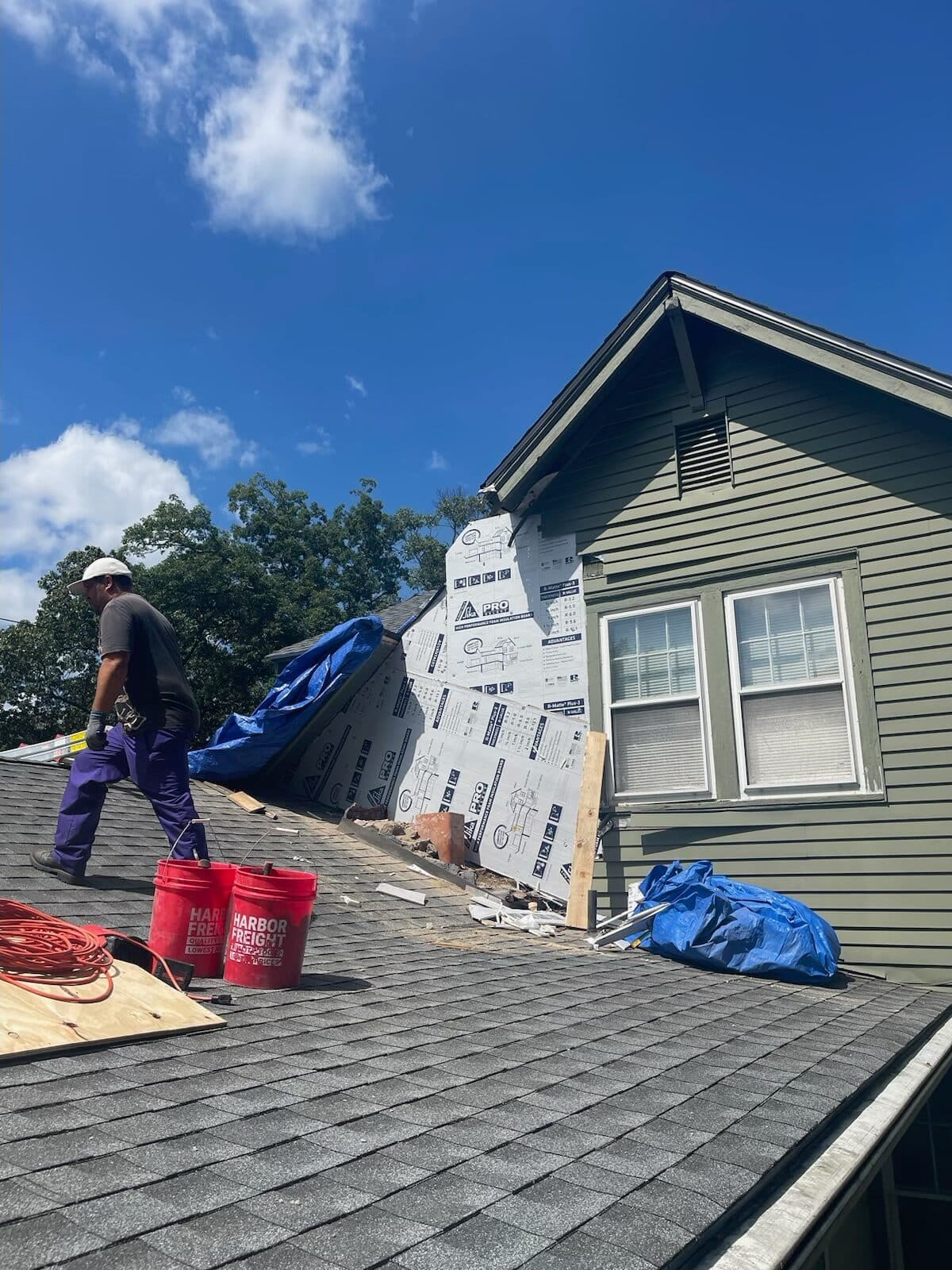
Plenty of small roof repairs are within reach of a careful homeowner. Plenty more are unsafe DIY projects that send people to the ER every summer, or create worse problems than the original issue. Knowing which is which is one of the more useful skills in home ownership — and saves both money and trips to the hospital.
This guide walks through what's genuinely DIY-friendly, what isn't, and the honest cost-benefit math on each. We'll also cover the common DIY mistakes we get called to fix professionally — usually at higher cost than just hiring out the original work would have been.
What's Safely DIY
Several roof-adjacent tasks are reasonable for a healthy, careful homeowner with proper ladder technique:
1. Replacing a Single Missing Shingle (From a Ladder)
If a single shingle is missing on a low-pitch roof and you can reach the location from a stable extension ladder without walking on the roof, replacement is straightforward DIY work. You need: a matching shingle (or close as you can find), roofing nails, a hammer, and a putty knife to break the seal under the surrounding shingles.
The process: slide the new shingle into place under the row above, nail it in the proper nailing strip, and re-seal the surrounding seals with roofing cement under each tab. Total time: 15–30 minutes. Total cost: a bundle of matching shingles and a tube of roofing cement.
When this is appropriate: low-pitch roof (under 4:12), accessible from a ladder, single shingle missing, you have a matching replacement. When it's not: steep roof, you'd have to walk on the roof to reach, you can't find a matching shingle, multiple shingles missing.
2. Cleaning Gutters
Gutter cleaning from a ladder is reasonable DIY work — but it requires proper technique. Stable extension ladder, level ground (not soft soil), at the proper angle (1 foot out for every 4 feet of height), and ideally a spotter at the base. Work gloves to protect from sharp gutter edges and unknown debris. Move the ladder regularly rather than reaching too far sideways from one position.
Do not climb onto the roof to clean gutters from above. This is one of the most common causes of homeowner ladder falls — the temptation to step off the ladder onto the roof to reach the next gutter section is huge, and the consequences when the roof is dewy or sloped are severe.
3. Resealing Exposed Nail Heads (From a Ladder)
Exposed nail heads in flashings or at ridge cap details can be resealed with roofing caulk from a ladder if you can reach. Use a quality urethane or polymer-based roofing caulk (not silicone — silicone doesn't bond to asphalt). Apply a small bead over the nail head and smooth it. The repair extends the seal life by several years and is well within DIY territory.
4. Emergency Tarping from Inside the Attic
If you have an active interior leak in the middle of a storm and need to contain the water until a roofer can come out, you can tarp from inside the attic. Stretch a plastic tarp under the leak point, attach to the rafters with staples or thumbtacks, and route the trapped water into a bucket via a low corner. This protects your ceiling drywall from further damage while you wait for professional response.
Do not attempt to tarp from the roof exterior during an active storm. Wet shingles are slippery, wind is unpredictable, and emergency response on a roof during a thunderstorm is professional work — we have proper equipment and training for it.
What's NOT Safely DIY
Several common 'DIY temptations' are professional work. Don't try these without proper training and equipment:
1. Walking on Any Pitched Roof
This is the single biggest line. Walking on a pitched roof above a single story without proper fall protection (harness, roof anchor, secured rope) is where serious injuries happen. The 'careful homeowner who knows the roof' falls in the same percentages as the careless one — gravity doesn't care about your experience.
If a repair requires walking the roof to access, it's professional work. Period. No exceptions for 'just a quick look' or 'just to check something.' Most professional roofers we know personally use fall protection on every roof. Homeowners almost never do.
2. Anything Involving the Chimney Crown or Flashing
Chimney crowns are concrete work that requires forming, mixing, and pouring on a sloped surface — easy to do wrong in ways that fail within a few years. Chimney flashing involves properly woven step-and-counter detail that takes apprentice-level training to get right.
DIY chimney repair almost universally involves caulking on top of failing components — a 'fix' that lasts a few months before the same leak returns. We get called to redo DIY chimney work constantly, and the redo costs more than hiring out the original repair would have.
3. Re-Bedding Flashing with Proper Step-and-Counter Detail
Flashing repair requires removing existing materials, installing new step flashing woven between shingle courses, cutting and installing counter flashing into the masonry, and sealing the seam to the brick or mortar joint. Each step requires specific tools and trained technique. Caulking over failed flashing — the DIY equivalent — fails within a year.
4. Anything on a Steep Pitch (7:12 or Steeper)
Steep pitches require fall protection regardless of training. Don't attempt any work on a steep roof without proper equipment. The fall risk is too high and the consequences too severe.
Why Falling Matters More Than People Think
The CDC reports roughly 500,000 ladder-related emergency room visits annually in the US, with the most severe injuries occurring during work on roofs. Most happen to non-professional homeowners attempting work above 6 feet. The breakdown of injury types:
- Fractures (hips, wrists, ankles, spine) — common in falls from 8–15 feet.
- Traumatic brain injuries — disproportionate occurrence in roof falls vs. ground-level injuries.
- Spinal cord injuries — career- and life-changing outcomes from falls onto hard surfaces.
- Death — small but non-zero percentage of falls above one story.
The cost savings of DIY vanish quickly against the medical-bill-and-lost-work-time math of a fall. A serious fall easily runs to five or six figures in direct medical costs, weeks to months of lost work, and potentially permanent life changes. The few hundred dollars saved on a single repair becomes meaningless in that context. Risk math heavily favors hiring out anything that requires walking on the roof.
The Hidden Cost of DIY Mistakes
Even when nobody falls, amateur repair work often creates worse problems than the original. Common DIY mistakes we get called to fix:
- Caulking the wrong joint. Homeowner sees water entering and seals the closest visible joint, which doesn't address the actual entry point. Water continues entering somewhere else, but now the homeowner thinks they fixed it and the damage compounds.
- Using roofing tar instead of proper repair materials. Tar hardens, cracks, and pulls away from the substrate within a year — and removing failed tar to do a proper repair afterward is harder than the original repair would have been.
- Nailing through the wrong place. Improper nail placement creates new leak paths and voids manufacturer warranties.
- Mixing incompatible materials. Silicone caulk on asphalt, for example, doesn't bond and creates a false seal that fails first time it's tested by rain.
- Skipping ice-and-water shield during a DIY repair near eaves. Setting up the next ice-dam failure.
The 'repair' becomes the new source of water entry, and the next call we get is to undo the DIY work and fix things properly. The redo costs more than the original repair would have, plus the homeowner has been dealing with active leaks during the gap.
When to Call Us Even on a 'Small' Repair
Call for professional repair if:
- Any work would require walking on the roof to access.
- The damage is near a chimney, skylight, vent, or other penetration.
- Multiple shingles are involved or you'd have to match a discontinued shingle line.
- There's any active interior water entry — you need diagnostic work to find the actual entry point, not just patching what you can see.
- The roof pitch is steep.
- You're over 60, have any mobility or balance issues, or aren't comfortable with ladder work.
- You're unsure about anything regarding the repair.
Free Inspections That Help You Decide
Tri-State inspections are free across our NJ service area. We come out, walk the roof safely with proper equipment, and tell you honestly whether your repair is DIY-friendly or needs a pro. Many times we tell homeowners 'you can handle this yourself — here's what to buy and how to do it.' We'd rather give you that advice and earn your roof replacement in 5–10 years than overcharge you on a repair you didn't need to hire out.
If the work does need a pro, we quote it on the spot with a written scope. Either way, you leave with photos and a written assessment. Call (201) 779-3961 or use our online quote form to schedule.
The Bottom Line
If you're under 60, in good health, comfortable on a ladder, and the work is genuinely accessible without walking on the roof — small repairs are fair game. Anything else is professional work. The roof isn't worth your spine, your savings, or the cost of redoing a botched DIY repair professionally. When in doubt, get a free inspection before you climb up there.
Last updated
Need Help With This?
We provide free, no-obligation inspections across New Jersey. Honest assessment, photo report, and a written estimate.