
·Chimney
Chimney Repair Case Study: How We Stopped a Two-Year Leak for Good
A New Jersey homeowner had chased the same chimney leak for two seasons. The previous contractor caulked it and walked away. Here's how we found the real source — three failures at once — and fixed it permanently.
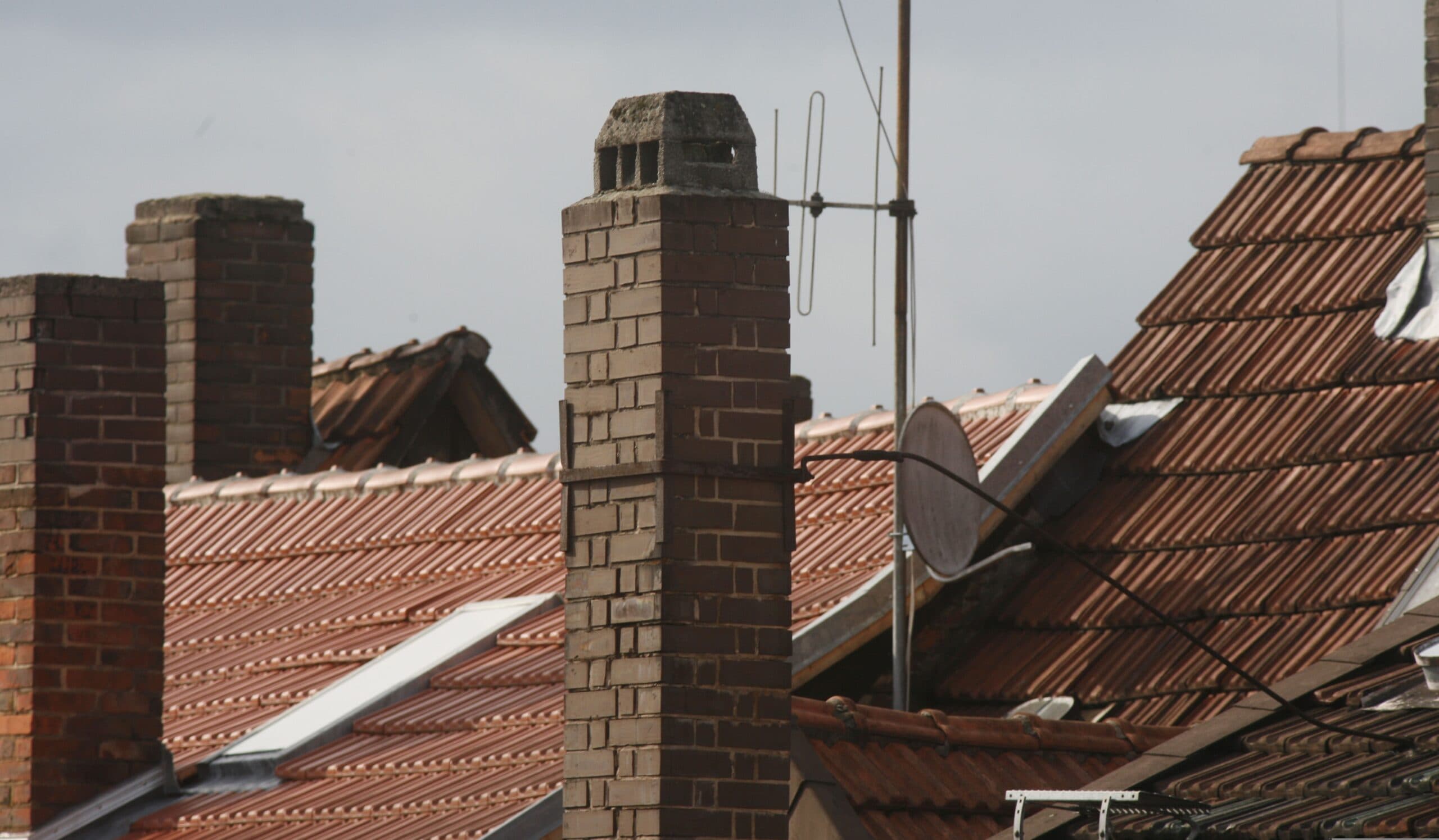
Chimney leaks are the most commonly misdiagnosed water entry problem in residential roofing. Most chimney leaks aren't really roof leaks at all — they're masonry, flashing, or cap failures that just happen to show up near the roofline. Homeowners chase them for years because contractors keep treating the symptom (visible water on a wall) instead of finding the actual cause (multiple small failures combining).
This case study walks through a recent chimney repair where the homeowner had been chasing a leak for two seasons with two previous contractors. Both had caulked the flashing, charged a few hundred dollars, and disappeared when the leak came back. Here's how we found what they missed and what a permanent fix actually looks like.
The History: Two Seasons of Failed Repairs
The homeowner first noticed a damp spot on the wall next to their fireplace during a heavy rain in fall. They called a chimney sweep who recommended a flashing repair. The sweep applied roofing caulk around the visible flashing edges and called it done. Total visit: 30 minutes, for the cheapest line item on any chimney menu.
Three months later, the stain reappeared after another heavy rain. The homeowner called a roofing contractor this time, who climbed up and applied more caulk on top of the previous caulk. Same result — works for a few rain events, then fails. By the time the homeowner found us, the wall around the chimney chase was showing visible mold, the paint was peeling along the chimney corner, and white efflorescence (mineral salts left behind by water moving through masonry) had started to appear on the brick exterior.
Two failed repairs and two seasons of water entry is a typical chimney-leak history. The previous contractors weren't lazy — they were treating the visible symptom (a gap in flashing) without diagnosing whether anything else was contributing. With chimneys, multiple small failures almost always combine to produce one big leak.
The Real Diagnosis: Three Failure Points at Once
Once we got up on the roof and walked the chimney, the picture was clear. The previous contractors had missed three separate issues, each of which on its own would have caused a leak eventually:
- The crown was cracked across the top. The crown is the concrete cap on the very top of the chimney, designed to shed water down the outside walls instead of into the chimney interior. Freeze-thaw cycles over years had cracked it through to the flue tile below. Water poured straight down into the chimney chase every rainfall.
- Mortar joints in the upper third of the chimney had failed. The original mortar was crumbling at multiple joints, with visible gaps you could fit a credit card into. Water entering the cracks would freeze, expand, and pry the bricks further apart — a feedback loop that accelerates over time.
- The step flashing had pulled away from the brick. The L-shaped metal flashing pieces that seal the chimney-to-roof intersection were no longer in contact with the masonry on the high side. The caulk from the previous repairs had cracked and the metal had migrated away from the brick by about 1/4 inch.
Any one of these would have caused the wall stain. All three at once meant water was entering from three independent paths simultaneously, and stopping just one wasn't going to do anything visible. That's why the caulk-only repairs failed — the caulk addressed maybe a third of the problem on a good day.
The Permanent Fix: Rebuild Three Systems
Because all three failures had to be addressed for the leak to actually stop, we wrote a scope that rebuilt three systems on the chimney rather than patching them. Here's what we did:
1. Crown Replacement
We chipped out the old cracked crown completely, exposing the brick courses underneath. We then formed and poured a new crown using high-strength portland cement mix with fiber reinforcement. The new crown was pitched to shed water away from the flue (a proper crown has a slope), oversized by about 1.5 inches on each side beyond the chimney face to create a drip edge so water falls clear instead of running down the masonry, and reinforced with a sacrificial bond-break around the flue tile so the cement doesn't crack when the flue tile expands thermally.
Crown replacements done right last 30+ years. Crown 'repairs' (which usually just smear concrete patcher across cracks) typically fail within 3–5 years. The cost difference between the two approaches is modest on a typical residential chimney — a fraction of what redoing the failed patch costs later. If a contractor offers a crown repair, ask whether they're patching or fully replacing — the answer matters.
2. Tuckpointing the Failed Mortar Joints
Tuckpointing is the process of removing failed mortar from the joints between bricks and replacing it with new mortar. We ground out the deteriorated joints in the upper third of the chimney to a depth of about 1 inch, brushed and rinsed them clean, and packed new Type N mortar (the appropriate strength for above-grade brick chimneys) into the joints in two passes for solid bond. We finished the joints flush with the brick face — slightly recessed, so the mortar isn't proud of the brick and creating water-holding ledges.
Tuckpointing extends the life of the masonry significantly. A properly tuckpointed chimney can outlast a complete rebuild by decades, and the cost difference vs. a full chimney rebuild is enormous. Worth doing as soon as you see mortar deterioration — putting it off lets water continue to enter and ultimately means a much larger repair.
3. New Step and Counter Flashing
We tore off the old step flashing and the years of caulk from previous attempted repairs. We installed new step flashing — L-shaped aluminum pieces that go up the chimney face and down onto the roof deck, one piece per shingle course, so the flashing is woven into the shingles rather than sitting on top of them. We then cut a 1-inch deep counter flashing reglet (a slot cut into the masonry mortar joint) along the chimney face, installed counter flashing into the reglet, and sealed it with high-temperature mortar sealant.
The combination of step flashing (sealed to the roof deck and shingles) plus counter flashing (sealed into the masonry above) creates a two-layer waterproof seal that doesn't depend on caulk to work. Caulk-only flashing dries out and fails. Properly installed step-and-counter flashing lasts for the life of the roof — typically 25-30 years.
Bonus: Vapor-Permeable Masonry Sealer
After the three rebuilds were complete, we applied a vapor-permeable masonry sealer to the entire chimney exterior. The key word is 'vapor-permeable' — the sealer blocks liquid water from entering the brick face but lets water vapor from inside the masonry escape outward. This prevents future cycle of water entering the brick, freezing, and prying the masonry apart from inside.
Non-permeable sealers (which look identical) are a mistake on chimneys — they trap moisture inside the masonry and accelerate freeze-thaw damage rather than preventing it. Make sure any contractor proposing a sealer specifies a vapor-permeable product.
Interior Repair: Drywall and Framing
With the exterior fixed, we addressed the interior damage. The drywall around the affected wall was removed (cut back well past the visible staining to make sure no mold-affected material was left in place), the framing behind it was inspected and dried, and any moldy or wet insulation was removed. We then installed new R-15 insulation, vapor barrier, and drywall, and returned to apply primer and paint after the area had cured.
Mold remediation in a small wall section like this is straightforward when the source of the moisture is fixed first. If the moisture isn't fixed, any drywall replacement just creates new substrate for mold to grow on. Source control is everything.
Follow-Up: Confirming the Fix Held
We returned after the next significant rain event (about three weeks later) to confirm the leak was stopped. No new staining, no new moisture in the wall cavity. We also returned six months later as part of our standard follow-up — same result, completely dry. The homeowner finally had a chimney that wasn't going to leak again every rainfall.
The 4 Most Common Chimney Leak Causes
Stepping back from this specific case: roughly 90% of chimney leaks we diagnose come down to four causes, often in combination:
- Cracked or damaged chimney crown — water enters through the top, into the chimney interior.
- Deteriorated mortar joints — water wicks into the masonry, freezes, and breaks the structure apart from inside.
- Failed or improperly installed flashing — water enters at the chimney-to-roof intersection.
- Missing or damaged chimney cap — water (and animals) get straight into the flue.
All four are repairable without rebuilding the whole chimney. Combined repairs cost significantly less than chimney rebuilds, last for decades, and stop leaks permanently. The key is diagnosing all the failure points at once — not just the obvious one.
Free Chimney Inspections in New Jersey
If you have a chimney leak, you've probably already tried a quick fix that didn't work. We'll come out free of charge, climb the roof, inspect the crown, mortar, flashing, and cap, and write a scope of work that addresses every failure point we find. The inspection is no-obligation — if you decide to go elsewhere with the actual repair, you'll still leave with photos and a written report showing exactly what's wrong. Call (201) 779-3961 or use our online quote form.
Last updated
Need Help With This?
We provide free, no-obligation inspections across New Jersey. Honest assessment, photo report, and a written estimate.