
·Chimney
Why Is My Chimney Leaking? The 4 Most Common Causes Diagnosed
Water stains around your fireplace? The chimney is the prime suspect — and 90% of the time it's one of four fixable causes. Here's how to identify which one (or which combination) is the source.
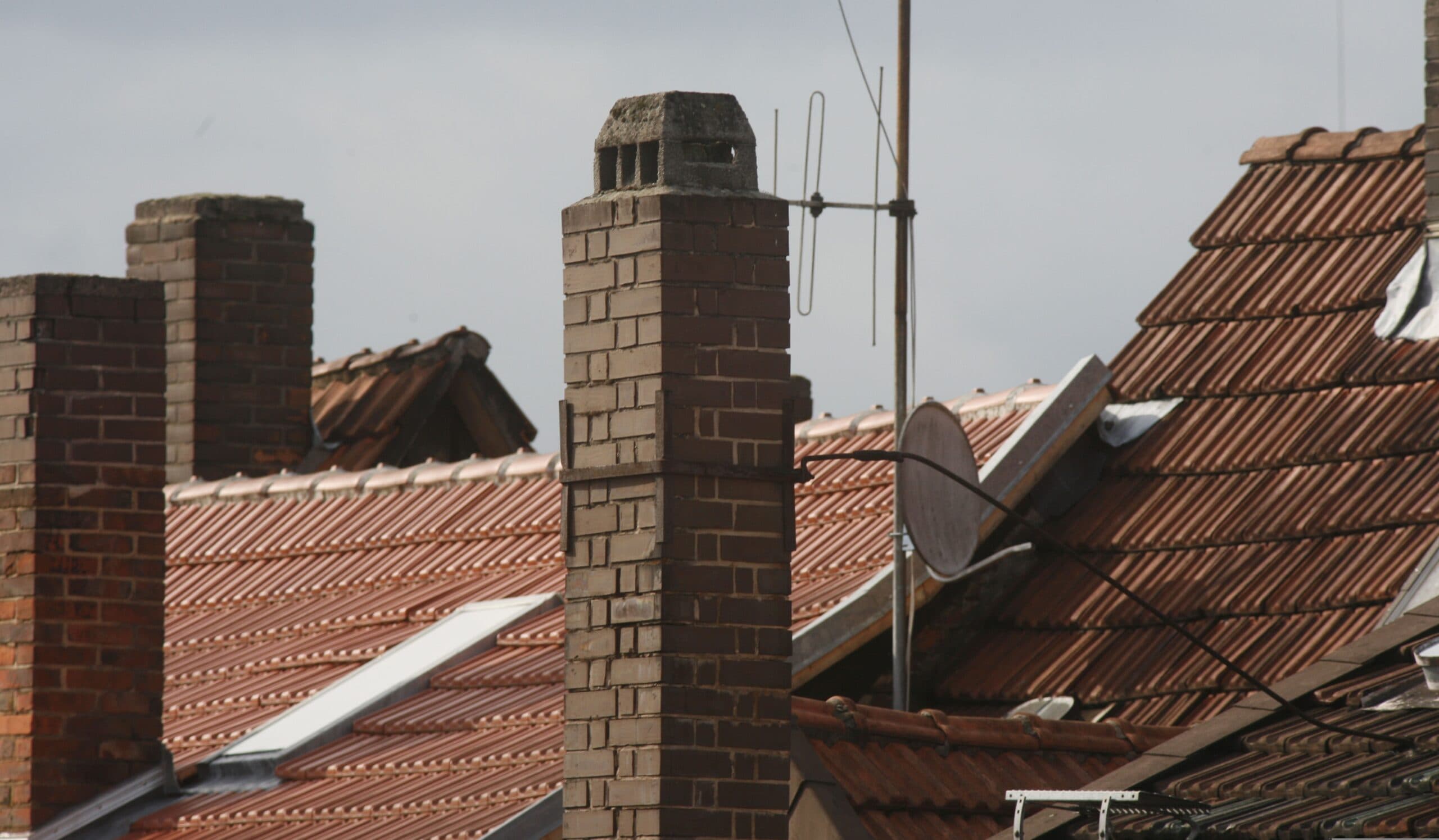
Water stains on the wall or ceiling near your fireplace almost always trace back to the chimney itself. The chimney is the single most common roof-area leak source we see — and the most commonly misdiagnosed. Roofers who don't understand masonry chase the wrong cause, masons who don't understand roof systems do the same in reverse, and homeowners end up paying for repeated repairs that don't fix the actual problem.
The good news: roughly 90% of chimney leaks come down to four causes. The other good news: all four are repairable without rebuilding the whole chimney. The challenge is that multiple causes often combine on the same chimney, so identifying the actual leak path requires looking at all four systems together rather than fixing the obvious one and hoping.
Here's how to diagnose each one, what the permanent fix looks like, and why caulk-only repairs almost always fail.
1. Cracked or Damaged Chimney Crown
The chimney crown is the concrete cap on the very top of your chimney — the flat-ish slab that the flue tile protrudes through. Its job is to shed water down the outside of the chimney rather than into the interior chase. When it cracks, water pours straight into the chimney every time it rains.
Why crowns crack: freeze-thaw cycling. NJ winters cycle the masonry through dozens of freeze events. Water in micro-cracks expands as it freezes, levering the cracks wider. Each year the cracks grow until the crown is structurally compromised. Cheap crown construction (using regular mortar instead of high-strength concrete) fails faster — sometimes within 10–15 years. A proper poured concrete crown lasts 30+ years.
How to spot it: look up at the chimney from the ground with binoculars. Visible cracks across the crown surface, missing chunks at the edges, or visible separation between the crown and the flue tile are all warning signs. From the roof, a closer inspection often reveals more — hairline cracks invisible from below can be wide enough to admit water.
The fix: full crown replacement. Chip out the old crown, form and pour a new high-strength concrete crown pitched to shed water, oversized to create a drip edge beyond the chimney face, and isolated from the flue tile with a sacrificial bond-break so thermal expansion doesn't crack the new crown. Crown 'patching' or 'sealing' with concrete patcher rarely works long term — the underlying structure is what failed, and a surface patch fails again within 3–5 years.
2. Failed Flashing at the Chimney-Roof Intersection
Flashing is the metal sealing where the chimney meets the roof. Proper chimney flashing is actually two layers: step flashing (small L-shaped pieces of metal woven between each shingle course up the chimney face) and counter flashing (a larger piece of metal cut into the masonry mortar joint above, lapping down over the step flashing). The combination creates a double seal that doesn't depend on caulk to work.
Why most chimney flashing fails: shortcut installs. Production builders and budget re-roofs often skip step flashing entirely, install a single piece of bent metal against the chimney, and seal it with caulk on top of the shingles. The caulk dries out within 5–7 years, cracks, and water starts entering at the chimney edge. Re-caulking on top of the failed caulk buys another year, but the underlying detail is wrong and will keep failing.
How to spot it: from the roof, look for separation between the flashing metal and the chimney brick, visible caulk that's cracking or yellowing, or flashing that's clearly sitting on top of the shingles instead of woven between them. From inside the attic, water staining or active drips at the chimney corner during rain confirm flashing failure.
The fix: tear off the failed flashing and any years of accumulated caulk, install proper step flashing woven into the shingle courses, cut a reglet into the mortar joint above to receive counter flashing, install counter flashing into the reglet, and seal with high-temp mortar caulk. Done right, this lasts the life of the roof — typically 25–30 years.
3. Deteriorated Mortar Joints
The mortar between bricks is the weak link in any masonry structure. Mortar is softer than the brick it bonds, by design — mortar is meant to fail before the brick so freeze-thaw damage occurs in the joints (where it's repairable) rather than in the brick itself. Over decades, mortar slowly erodes, develops cracks, and ultimately loses its bond — admitting water into the chimney structure.
Why mortar failure causes leaks: water entering through deteriorated joints can travel laterally through the masonry and exit on an interior wall, or freeze inside the wall and crack bricks from inside. White efflorescence on the chimney exterior (mineral salts left behind by water moving through the masonry) is a sign that water is actively traveling through the brick — not just sitting on the surface.
How to spot it: look closely at the mortar joints from a few feet away. Visible gaps, recessed mortar pulling back from the brick face, cracks running through joints, or missing chunks all indicate deterioration. The upper third of the chimney usually fails first — it's the most weather-exposed and the most freeze-thaw cycled portion.
The fix: tuckpointing. Grind out the failed mortar to a depth of about 1 inch, brush and rinse the joints clean, and pack new Type N mortar in two passes. Finish joints flush or slightly recessed (not proud of the brick face). Tuckpointing extends the life of the masonry by decades and prevents the small mortar problem from becoming a chimney rebuild.
4. Missing or Damaged Chimney Cap
The chimney cap is the small roof-like structure over the top of the flue tile. Its job is twofold: keep rain and snow out of the flue itself, and keep animals (squirrels, raccoons, birds) from nesting in or falling down the chimney. A missing cap means rain falls straight down the flue, dripping into the firebox or down between the flue tile and the masonry chase.
Why caps go missing: original installs often skipped them (especially on older NJ homes), the metal corrodes over decades and falls off, or animals damage them. We see a surprising number of chimneys with no cap at all — homeowners often don't know what's supposed to be up there.
How to spot it: look at the top of your chimney from the ground. If you can see the flue tile opening directly (no metal cover over it), there's no cap. If you can see a cap but it's tilted, rusted-through, or partially missing, it's failing.
The fix: install a new stainless steel chimney cap sized to your flue tile. Stainless lasts essentially forever; galvanized is cheaper but rusts within 10–15 years and needs replacement. Cap install is usually under an hour and resolves the water-in-the-flue problem permanently.
How These Causes Combine
On any given leaking chimney, you might see one, two, or all four of these failures contributing simultaneously. A 30-year-old chimney that's never been serviced typically has a cracked crown, deteriorated upper mortar, failed flashing from the original install, and a missing or damaged cap — all combining to produce one wet wall inside the house.
This is why caulk-only repairs almost always fail. The caulk addresses maybe a third of the problem at most. The other failure paths continue admitting water, and the leak comes back. A proper diagnosis looks at all four systems, identifies which are contributing, and rebuilds whatever's failed — not just the most visible issue.
Why Most Chimney Leaks Aren't Roof Leaks
Homeowners often call a roofer first when they see water near the chimney. The roofer climbs up, looks at the shingles, and reports back that the roof is fine. The leak continues. Then they call a mason, who looks at the brick, recommends tuckpointing, and the leak continues after that too — because the mason fixed the masonry but didn't address the flashing or crown.
Chimney leaks need a contractor who works on both the masonry and the roof system — someone who can diagnose the crown, the flashing, the mortar, and the cap together. That's why we handle chimney leak repairs end-to-end on the same crew rather than coordinating between roofers and masons. One scope of work, one schedule, one warranty for the whole repair.
Free Chimney Inspections in New Jersey
Most chimney leaks are repaired in 1–2 days once we have a proper scope of work. The inspection that identifies all the failure points is free across our NJ service area. We climb the roof, inspect the crown, mortar, flashing, cap, and surrounding shingles, photograph every issue, and write up a scope that addresses each one. No-obligation — if you decide to use another contractor, you leave with photos and a written report. Call (201) 779-3961 or use our online quote form to schedule.
Last updated
Need Help With This?
We provide free, no-obligation inspections across New Jersey. Honest assessment, photo report, and a written estimate.