
About Our Masonry, Brick & Concrete Service
Brick, block, stone, and concrete all fail the same way in New Jersey: water gets into a joint or a crack, freezes, and pries the masonry apart one winter at a time. We repoint failing joints with the right mortar, repair and match brick and stone, and rebuild steps, stoops, and walkways that have heaved or crumbled. Same masons who rebuild chimneys — this is the trade, not a side service.
Repointing & Tuckpointing: The Joints Are the Sacrifice
Mortar joints are built to be the part that wears out. They're softer than the brick or stone on purpose, so weathering eats the joint instead of the masonry itself. When the joints recede, crack, or wash out, water starts getting behind the wall — and in New Jersey, water behind masonry over the winter is what spalls brick faces and loosens whole sections. Repointing is grinding the failed mortar out to proper depth and repacking the joint with fresh mortar. Tuckpointing is the same work with a finished joint line; people use the words interchangeably.
The detail that separates a repair from a slow-motion mistake is the mortar mix. A lot of older North Jersey homes — brownstones, century-old brick, fieldstone foundations — were built with soft lime-based mortar that was meant to flex and breathe with the masonry around it. The mortar is supposed to be the give in the wall. Repoint that masonry with a hard, Portland-heavy mix and you invert that relationship: now the joint is stronger than the brick, so when the wall expands in a freeze it's the brick face that surrenders, not the mortar. We match the mortar's strength to whatever the building was actually built with, because getting that wrong doesn't just fail — it does more damage than leaving the old joints alone.
Brick & Stone Repair, Replacement, and Matching
When individual brick or stone has spalled, cracked, or worked loose, the fix is cutting out the failed units and resetting sound ones — not skim-coating over the damage. The honest challenge on older homes is matching: brick color, size, and texture have changed over the decades, and a bad match shouts. We source the closest brick or stone we can find and lay it so the repair reads as part of the wall, not a scar.
We also handle the structural details around masonry openings — lintels (the steel or stone spanning a window or door) and sills that have rusted, cracked, or dropped, plus stone veneer on facades, columns, and foundations. A failed lintel is one of the quieter problems we find, because the cracking above a window gets blamed on settlement when the real culprit is a rusted steel lintel expanding behind the brick.
Steps, Stoops, Porches & Walkways
Concrete and masonry steps take more abuse than any other masonry on a house — foot traffic, road salt, and standing water at every tread. When they crack, tilt, or crumble, the first question is repair versus rebuild. If the structure is sound and only the surface has gone, we can parge and resurface (parging is troweling a fresh masonry coat over the existing one) or reset loose treads and risers. If the steps have heaved, separated from the house, or the core is crumbling, resurfacing only hides it for a season — that's a rebuild on a proper footing.
Same logic on walkways and porches: we'd rather tell you a targeted repair holds than sell you a teardown you don't need — and we'll tell you just as plainly when patching a failed slab is throwing money at it.
Concrete Flatwork & Resurfacing
Beyond steps, we pour and repair concrete flatwork — walkways, pads, aprons, and small slabs — and resurface concrete that's spalled or scaled at the surface but still structurally sound underneath. Resurfacing buys real years on concrete that looks rough but isn't failing. Where the slab has cracked through, heaved, or lost its base, we'll tell you that resurfacing is lipstick and a repour is the right call.
The Chimney-Masonry Connection
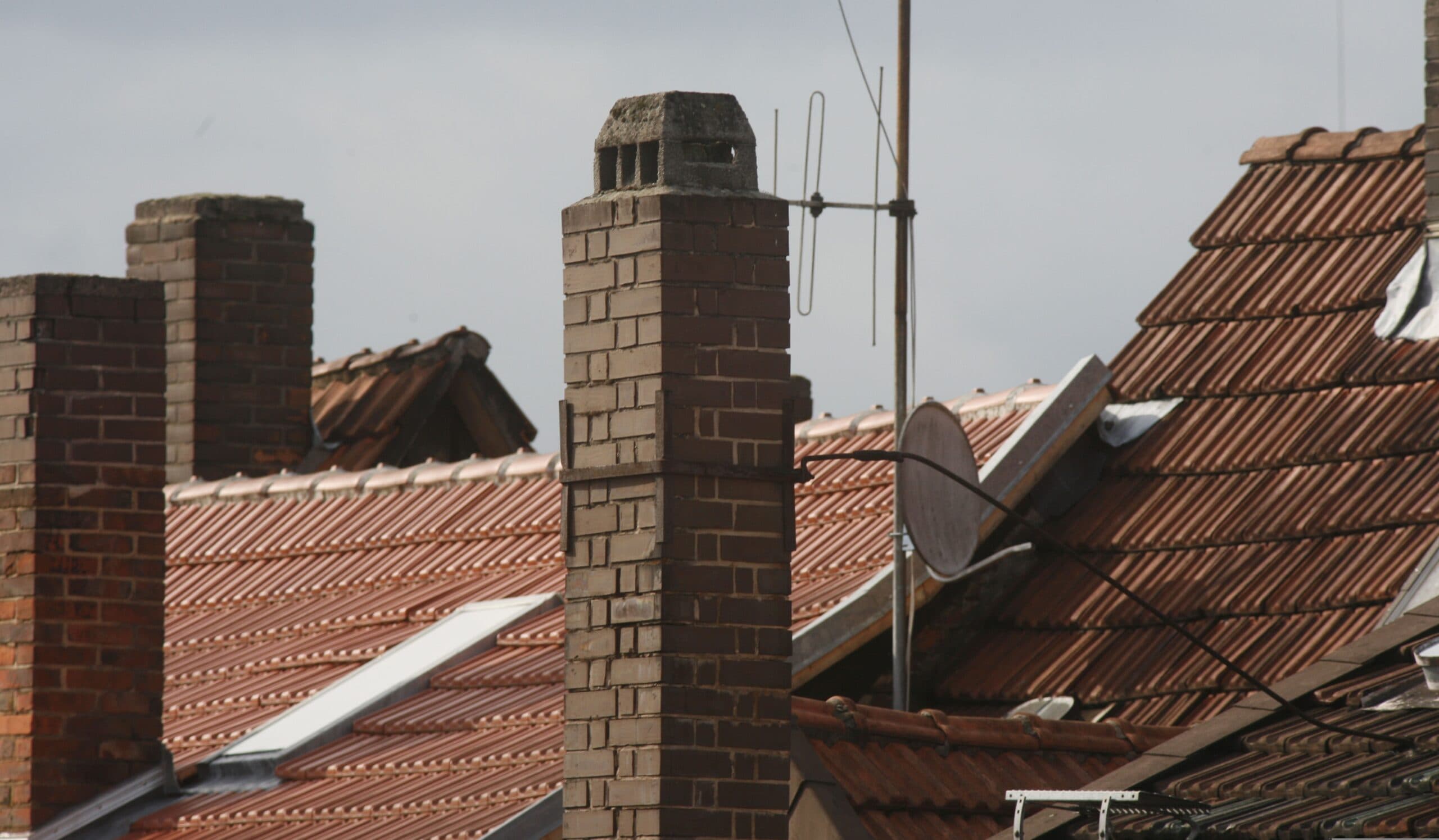
If you want proof we do masonry rather than dabble in it, look at the chimney work. The same crew that repoints your steps casts chimney crowns, matches mortar on hundred-year-old stacks, and rebuilds chimneys course by course. Brick, block, stone, and mortar are the daily trade here — which is why we can read whether your masonry needs pointing, patching, or rebuilding without guessing. See our chimney rebuild work and our chimney repair cost guide for the same skill applied up on the roof, and our foundation repair & waterproofing page for masonry below grade.
What Drives the Cost
Masonry pricing comes down to scope and access more than anything, so we quote off what the work actually involves:
- Repair vs. rebuild — repointing a section of joints is a fraction of tearing down and relaying the wall.
- Square footage and joint length — a few feet of failed mortar is the cheapest item here; a full facade repoint is a real project.
- Matching difficulty — sourcing brick or stone to match an older home takes time and adds to the work.
- Mortar type — historic lime work is more specialized and slower than standard Portland mixes.
- Access and staging — ground-level steps are simple; second-story facade or tight-clearance work needs staging.
What's Included
- Repointing and tuckpointing failed mortar joints
- Brick and stone repair, replacement, and matching
- Lintel, sill, and stone veneer work
- Concrete steps, stoops, porches, and walkways
- Concrete flatwork and resurfacing
Masonry, Brick & Concrete — Common Questions
Do I need repointing or a full rebuild?
Repointing fixes the joints; a rebuild fixes the wall. If the brick or stone is sound and only the mortar joints have receded, cracked, or washed out, repointing — grinding out the failed mortar and repacking it — is the right repair and a fraction of the cost. A rebuild is for masonry that's structurally gone: bulging walls, brick spalling off in sheets, or units loose enough to move by hand. We'll tell you honestly which one your wall needs; most walls we see need pointing, not tearing down.
Why is my brick spalling (flaking and popping)?
Spalling is freeze-thaw damage. Water gets into the brick — usually through failed mortar joints — freezes, expands, and pops the face off. Two things accelerate it: deteriorated joints letting water in, and the wrong mortar. Older brick was made for soft lime mortar; when someone repoints it with hard Portland mortar, the brick can't move during freeze-thaw and the joint forces the damage into the brick face instead. The fix is repointing with mortar matched to the brick, and replacing units that have already spalled through.
Can you match my existing brick or stone?
We get as close as the material market allows, and on most homes the repair blends in. Brick and stone styles, colors, and sizes have shifted over the decades, so an exact match on a century-old home isn't always possible — but a careful one reads as part of the wall, not a patch. We'll show you the closest brick or stone we can source before we set anything, so there are no surprises.
Do you repair concrete steps, or only replace them?
Both — and we lead with repair when repair will actually hold. If the steps are structurally sound and only the surface has spalled or a tread has loosened, we resurface, parge, or reset rather than tear out good masonry. When steps have heaved, pulled away from the house, or the core is crumbling, resurfacing only hides it for a season, and a rebuild on a proper footing is the honest call. We'll tell you which one yours is.
How long does mortar last?
Good repointing with mortar matched to the masonry typically lasts decades — often 25 years or more before joints need attention again. What shortens that is water and the wrong mortar: joints that aren't shedding water, or hard Portland mixes packed into masonry built for soft lime, fail far sooner and can damage the brick on the way out. Mortar matched to the wall and pointed to proper depth is the difference between a repair that lasts a generation and one you redo in a few winters.
Masonry, Brick & Concrete by Location
Dedicated masonry, brick & concrete pages for the counties and cities where we do most of this work — written with local code, weather, and neighborhood context.