
·Insurance
How to File a Roof Insurance Claim in New Jersey: The Complete Step-by-Step Guide
Most NJ homeowners file a roof insurance claim once in their lifetime — and doing it wrong is the difference between a fully paid replacement and a denied claim. Here's the full 8-step process from storm to final payment.
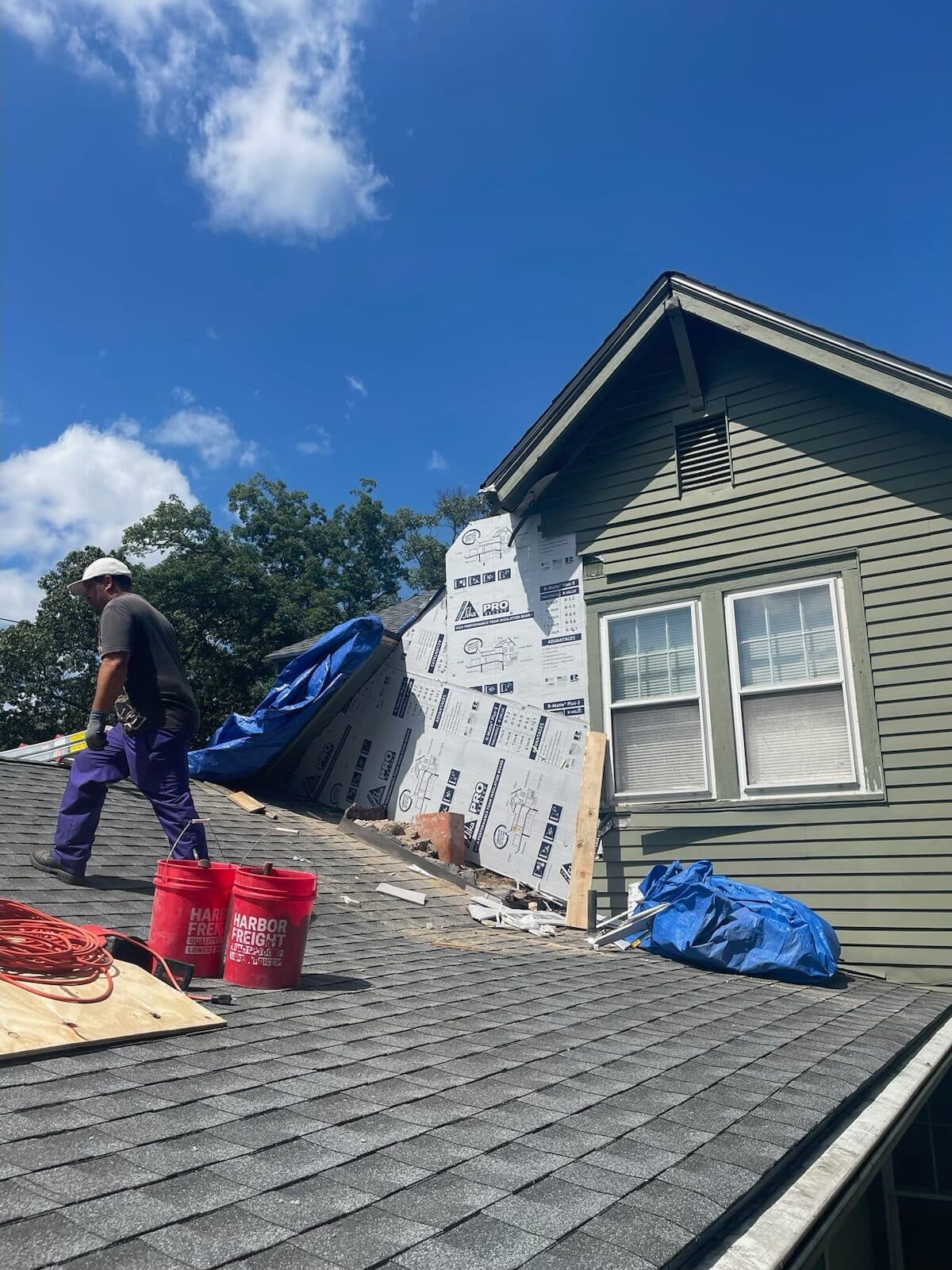
Filing a roof insurance claim isn't inherently complicated, but doing it wrong is the difference between a fully covered roof replacement and a denied claim. Most NJ homeowners only go through this process once in their lifetime — which means they're learning the rules at the worst possible time, right after a stressful storm event.
This guide walks through the complete 8-step process from initial storm damage to final insurance payment. Read it before you have damage so you know what to do when something happens, and reference it during an active claim to make sure you're not missing steps. The order matters; the timing matters. Doing this right gets your roof replaced; doing it wrong loses you the claim or significant portions of the coverage you were entitled to.
Step 1: Document Immediately (Within 24–48 Hours)
Within 24–48 hours of the storm or damage event, photograph everything. The timing matters — adjusters and carriers look at the gap between when the damage event happened and when documentation was created. Photos taken weeks later carry less weight than photos taken the next day.
What to photograph:
- Exterior roof damage from the ground — every visible damaged element, photographed from multiple angles.
- Any shingles, debris, or roof material in the yard, on the driveway, or against the foundation.
- Interior water stains, ceiling damage, peeling paint — anywhere water entered.
- Damaged gutters, vents, fences, outdoor furniture — anything affected by the same storm event.
- Wide-context shots showing the overall house and damage location, plus close-up shots showing detail.
Modern phone photos automatically include date/time metadata — important evidence that the documentation was created promptly after the event. Don't crop, edit, or modify the photos in any way; preserve the originals with intact metadata.
Step 2: Call a Roofer Before Insurance
Counterintuitive but critical: call a roofer (us) before calling your insurance company. We come out, walk the roof safely with proper fall protection, and write a detailed scope of damage with professional photos. This contractor scope becomes your evidence document for the entire claim process — much stronger than 'I noticed some damage after the storm' from a homeowner's perspective.
Why before insurance? Two reasons:
- The adjuster's job is to write the lowest-cost estimate they can justify. Having your own scope as a counter-document changes the negotiation dynamics from the start.
- We can identify damage that's not obvious to a non-roofer. Subtle hail damage, lifted seals, hidden granule loss patterns — things that affect the value of the claim significantly.
Our inspections are free across NJ. The scope and photos we provide are yours regardless of whether you use us for the eventual repair work.
Step 3: Call Your Insurance Company
Once you have your documentation and contractor scope in hand, call your insurance company to report the loss:
- Provide the date of the damage event, the cause if known (storm, hail, wind, fallen tree), and a basic description of what you can see.
- They'll open a claim and assign an adjuster. Note the claim number — you'll reference it through the entire process.
- Don't speculate about cause if you're not sure. Just describe what you see — 'shingles missing from the south slope, ceiling staining in the upstairs bedroom.' Speculating wrongly about cause can sometimes complicate the claim later.
- Ask about your policy's specifics: notice deadline, deductible amount, whether you have RCV or ACV coverage, any relevant endorsements (cosmetic damage exclusion, etc.).
- Schedule the adjuster visit — adjusters in NJ typically come out within 1–2 weeks of the initial call.
Step 4: Adjuster Site Visit
The adjuster will schedule a roof inspection at your home. This is the single most important meeting in the claim process — what the adjuster sees and includes in their estimate determines what the carrier will pay.
Critical: have your contractor (us) present at the adjuster meeting. We meet them on-site, walk the roof with them, and make sure every damaged component we documented gets included in their estimate. Adjusters often miss things — sometimes accidentally (they're not roofers), sometimes intentionally (lower estimate = lower payout). Having a contractor present prevents both.
What we do during the adjuster visit:
- Walk the roof with the adjuster and point out every damaged element from our scope.
- Discuss specific repair vs. replacement approach for each damaged area.
- Confirm material types, gauges, and grades that should be specified in the estimate.
- Photograph the meeting and the adjuster's process for our records.
- Provide our written scope to the adjuster for reference.
Step 5: Review the Adjuster's Estimate
Once the adjuster writes their estimate (typically within 1–2 weeks of the site visit), we compare it line-by-line to our scope of damage. Common discrepancies:
- Missing line items — damage we documented that the adjuster's estimate doesn't include.
- Under-priced repairs — line items where the price is below current NJ market rates.
- Wrong scope — repair specified where replacement is appropriate, or partial replacement where full replacement is needed.
- Missing supplementary items — disposal, permits, related items that should be included.
When we find discrepancies, we write a supplement — a written document explaining the missing items, why they should be included, and what the appropriate price is. Reasonable supplements get approved most of the time. The carrier expects supplements as a normal part of the negotiation; the adjuster's estimate is usually a starting point rather than a final answer.
Step 6: Receive the ACV Payment
After the scope is agreed (initial estimate plus approved supplements), the carrier issues the first payment: the Actual Cash Value (depreciated value) of the work.
ACV is the Replacement Cost Value (RCV) minus depreciation based on roof age and condition. On an older roof, ACV can be significantly less than RCV — sometimes 30–50% less. The depreciation is held in reserve until the repair work is actually completed; you receive it as 'Recoverable Depreciation' in step 8.
The ACV check is typically made out to: you, your mortgage company (if you have a mortgage), and our company. The mortgage company endorses for their share of the proceeds; your bank handles the endorsement process. We don't take any payment yet — the funds stay in your account until the work is being done.
Step 7: Work Is Performed
We schedule the install, complete the work, and document with photos at each milestone:
- Pre-install photos showing the existing damaged roof.
- Tear-off documentation if needed (including any deck damage discovered).
- Underlayment and ice-and-water shield install photos.
- Mid-install photos showing flashing, ventilation, and details.
- Final completion photos.
- Magnetic sweep cleanup confirmation.
You don't write us a check during the install. We get paid from the insurance proceeds — the ACV check you already received, plus the Recoverable Depreciation released in step 8. Your only out-of-pocket cost should be your policy deductible, which is typically paid at install start or completion.
Step 8: Receive Recoverable Depreciation
Once the work is complete and we provide the carrier with a Certificate of Completion (along with final photos), the carrier releases the remaining depreciation amount — the difference between ACV and RCV. Typical timeline: 2–4 weeks after completion.
At this point the claim is closed. You should have:
- A new roof installed per the agreed scope.
- Total insurance payments equal to RCV (the full cost of the work, minus your deductible).
- Manufacturer warranty registered in your name.
- Our workmanship warranty in writing.
- All paperwork — Certificate of Completion, before/after photos, scope documentation — provided to you for your records.
Common Claim-Killers (Avoid These)
Things that get NJ insurance claims denied or significantly reduced:
- Delaying documentation. Photos taken weeks after the event are less credible than photos taken the next day.
- Starting any repair work before the adjuster has seen the damage. The carrier needs to see what they're paying for.
- Filing for routine wear-and-tear damage that isn't from a specific storm event. Insurance doesn't cover aging; only sudden damage.
- Not having an independent contractor scope as counter-evidence. Adjuster estimates without contractor pushback usually come in low.
- Missing the policy's notice deadline. Report within days, not weeks.
- Accepting the first estimate without review. Most adjuster estimates need supplements to capture the actual work scope.
- DIY repair work before the claim is settled. Even minor patching can void the claim by altering evidence.
Tri-State Handles the Heavy Lifting
Working a roofing insurance claim correctly takes significant time and expertise — most homeowners don't have either. Our process is built to handle the claim end-to-end. You file the initial claim with your carrier; we handle the documentation, adjuster meeting, scope negotiation, supplements, and final paperwork. Your time investment is essentially zero past the initial claim call.
Call (201) 779-3961 after any storm or damage event. The inspection is free, the documentation we provide protects you, and we handle the claim work whether you ultimately use us for the repair or not. Don't try to navigate the claim solo — it's the kind of expertise where having the right contractor partner matters significantly.
Last updated
Need Help With This?
We provide free, no-obligation inspections across New Jersey. Honest assessment, photo report, and a written estimate.