
·Process
Tear-Off vs Layover: When Is It OK to Roof Over Existing Shingles in NJ?
Roofing over an existing layer of shingles costs less upfront — and hides what's underneath. Here's when layover is a legitimate compromise and when it's a corner-cut you'll regret in 7 years.
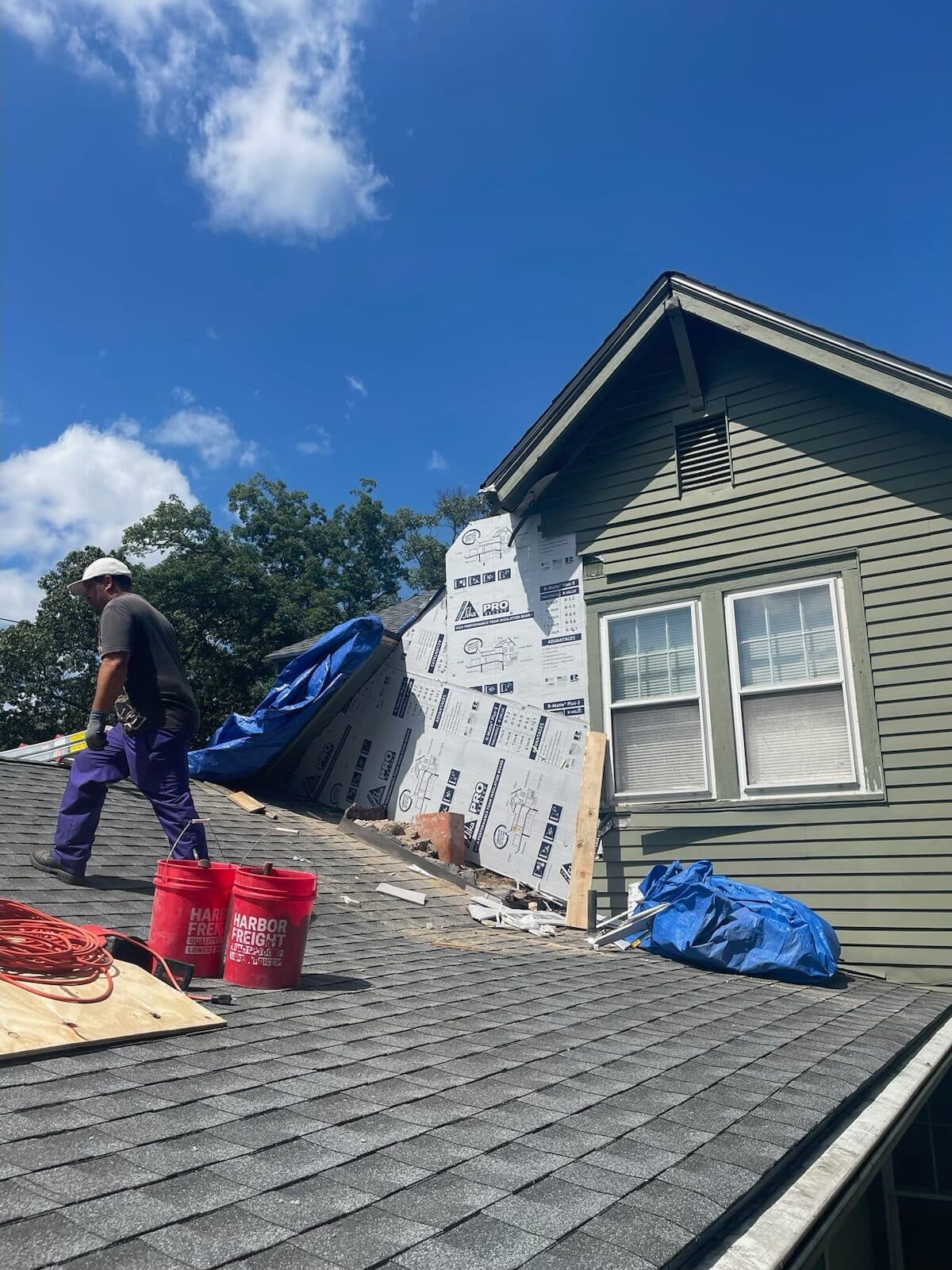
When you get roof estimates in New Jersey, some contractors will offer 'layover' — installing the new shingles directly over the existing roof without tearing off the old layer. It's cheaper, faster, and sometimes legitimate. It's also sometimes a corner-cut that hides serious problems and creates much larger ones a decade later. Knowing when layover is acceptable and when it's a mistake is one of the more useful pieces of contractor knowledge to have before you commit.
This guide walks through what layover actually is, when NJ code allows it, what you save and what you give up, and the situations where each approach is the right call.
What Layover Actually Is
On a typical roof replacement (tear-off), the existing shingles are stripped down to the bare deck, the deck is inspected and repaired as needed, new underlayment is installed, and new shingles go on a clean substrate. On a layover, the new shingles are nailed through the existing shingle layer into the deck below — no tear-off, no deck inspection, no new underlayment. The old shingles stay in place; new shingles go on top.
From the street, a layover and a tear-off look similar after install (though layover usually has subtle bumps and ridges from the old shingles telegraphing through). The differences are all hidden under the new shingles — and they matter.
When NJ Code Allows Layover
NJ residential code generally allows up to two layers of asphalt shingles on a roof. The rules are straightforward:
- If you currently have one sound layer, a layover to make two can be allowed — but N.J.A.C. 5:23-6.4 requires the old covering to come off first when it is deteriorated beyond use as a base, when it is wood shake, slate, clay, cement or asbestos-cement tile, or when the roof already has two or more layers. The roof structure also has to carry the extra weight.
- If you already have two layers, full tear-off is required before installing a new roof. No exceptions — and 'tear off one layer, lay over the other' isn't typically allowed either.
- If you don't know how many layers are on your current roof, your contractor can determine this from the eaves where the layers are visible, or by lifting a shingle to inspect.
- Structural review may be required if the existing roof was already at the weight limit (rare on most NJ homes but possible on older homes with marginal rafter sizing).
Whether a layover needs a permit depends on your building — our guide to who needs a roof permit in NJ walks through it. On an attached home or a building of three or more units, a contractor who wants to skip a required permit to save a few hundred dollars is a red flag.
What You Save with Layover
Layover typically saves 15–25% of the total install cost compared to tear-off. The savings come from:
- Disposal cost of the old shingles — typically several hundred dollars worth of dump fees plus the dumpster rental.
- Labor to tear off the old roof — usually a half-day or full day of crew time depending on size.
- New underlayment material and labor — the old underlayment stays in place, so the new install doesn't need to install fresh material.
- Some flashing work — existing flashings are sometimes reused on a layover (though good practice is to replace flashings anyway).
On a typical NJ residential roof, the savings are real but not transformative — a single-digit percentage of a project that's already in the low five figures.
What You Give Up: The Hidden Costs
The savings aren't free. Three significant compromises come with a layover:
1. No Deck Inspection
The most important compromise. The roof deck is plywood (or sometimes OSB or board sheathing) — the structural surface under the shingles. Decks can have:
- Rotten plywood near the eaves from chronic ice-dam damage over years.
- Wet or soft plywood near chimneys, vents, or skylights where flashing has been leaking.
- Delaminated plywood from any chronic moisture exposure.
- Damaged sheathing from animal entry or pest damage.
- Improperly fastened or missing fasteners from the original construction.
On a tear-off, all of this is visible and repairable before the new roof goes on. On a layover, none of it is. You're installing your new roof over an unknown deck condition, and any problems on the deck continue to compound under the new shingles. Five years later when you have an unexplained leak, the source is sometimes deck damage that was already present at the layover install.
2. No New Underlayment
On a tear-off, new synthetic underlayment goes down on the clean deck — providing backup waterproofing that lasts the life of the new roof. On a layover, the new shingles rely on the old underlayment underneath the old shingles. That old underlayment may already be at end-of-life — dried out, brittle, no longer providing meaningful waterproofing.
The new shingles do most of the waterproofing work in either case, so you don't notice the missing underlayment until something fails on the shingles — a wind event tears a few off, a tree branch damages an area, or a pipe boot leaks. On a tear-off install, the new underlayment catches that water. On a layover install, the failed old underlayment doesn't — and you have an active leak immediately.
3. Cleaner Install
Layover shingles install on top of the old shingles, which means the new layer follows every bump, ridge, lifted edge, and uneven surface of the old roof. Even with the best layover install, the result has subtle aesthetic compromises:
- Visible bumps where old shingle edges telegraph through.
- Slightly uneven appearance from the ground compared to a tear-off install.
- Older underlayment ridges or wrinkles showing through.
- Trim and flashing details that don't lay as flat against the new shingles because the underlying surface isn't even.
The aesthetic difference is subtle but visible — close inspection of a layover roof vs. a tear-off roof side by side will show the layover looks slightly less crisp. Resale buyers and home inspectors sometimes notice.
When Layover Makes Sense
Despite the compromises, layover has legitimate use cases:
- The existing roof is a first layer (no double-layer issue), and in good condition.
- No history of leaks, wet attic insulation, or visible deck damage from inside the attic.
- Existing flashings are in good condition and being replaced as part of the layover scope.
- Roof structure is rated for the extra weight of double-layer shingles.
- Budget genuinely won't accommodate full tear-off and the choice is between layover now or no replacement at all.
- Short-term ownership intent — you're planning to sell within a few years and just need a roof that performs for the immediate future.
Outbuilding roofs (garage, shed) are also legitimate layover candidates because the stakes are lower and the consequences of hidden deck issues are less expensive than on a primary residence.
When Layover Is a Mistake
Don't do a layover if:
- The existing roof has shown leaks at any point in recent years.
- You have wet, matted, or moldy attic insulation indicating chronic moisture entry.
- The roof already has missing shingles, visibly damaged areas, or known storm damage.
- Underlayment is visibly aged or exposed at the eaves and looks brittle or torn.
- The current roof is already at two layers (code prohibits a third).
- You're planning to stay in the home long-term and want maximum roof life.
- Deck condition is unknown — particularly on older homes where the original construction quality is uncertain.
In any of these situations, the hidden costs of layover are likely to be much larger than the upfront savings. The deck issues compound, the underlayment failures cascade into active leaks, and you end up paying for the tear-off you skipped — plus interior damage repair — five to ten years later.
Insurance and Resale Considerations
Two side considerations homeowners often miss:
- Some homeowner insurance policies have language affecting coverage for damage on double-layer roofs. Read your declarations page or call your carrier before opting for a layover.
- Home inspectors typically note double-layer roofs in their reports during a future sale. Some buyers see this as a flag and adjust their offers accordingly. The 'savings' you got on layover sometimes come back as price reductions at resale time.
- Manufacturer warranties on the new shingles may be affected by the layover install — read the warranty terms carefully before installing.
Our Default Approach
Tri-State defaults to full tear-off on every quote. We believe it's the right approach for almost all NJ primary residences — the deck inspection alone is worth the additional cost, and the long-term performance difference is significant. We offer layover as a documented alternative when it's legitimately appropriate (single existing layer, good condition, customer constraints requiring it), with clear written language about what we can and can't inspect underneath.
If we tear off and find rotten deck, you'll know about it with photographs before we cover anything back up. The deck replacement is quoted as a separate line item so you see exactly what you're paying for. Compare that level of transparency to a layover where the same problems are invisible and uncalled-out — you save money upfront and inherit unknown deck conditions you'll never see.
Get a free estimate that itemizes tear-off vs. layover options if you want to compare for your specific roof. Call (201) 779-3961 or use our online quote form.
Last updated
Need Help With This?
We provide free, no-obligation inspections across New Jersey. Honest assessment, photo report, and a written estimate.