
·Process
The 25% Rule in Roofing: What It Really Means for Your Repair vs. Replace Decision
Contractors and insurance adjusters cite the '25% rule' constantly — but it's directionally correct, not universally applied. Here's when it's right, when it's wrong, and how to use it as a decision framework instead of a script.
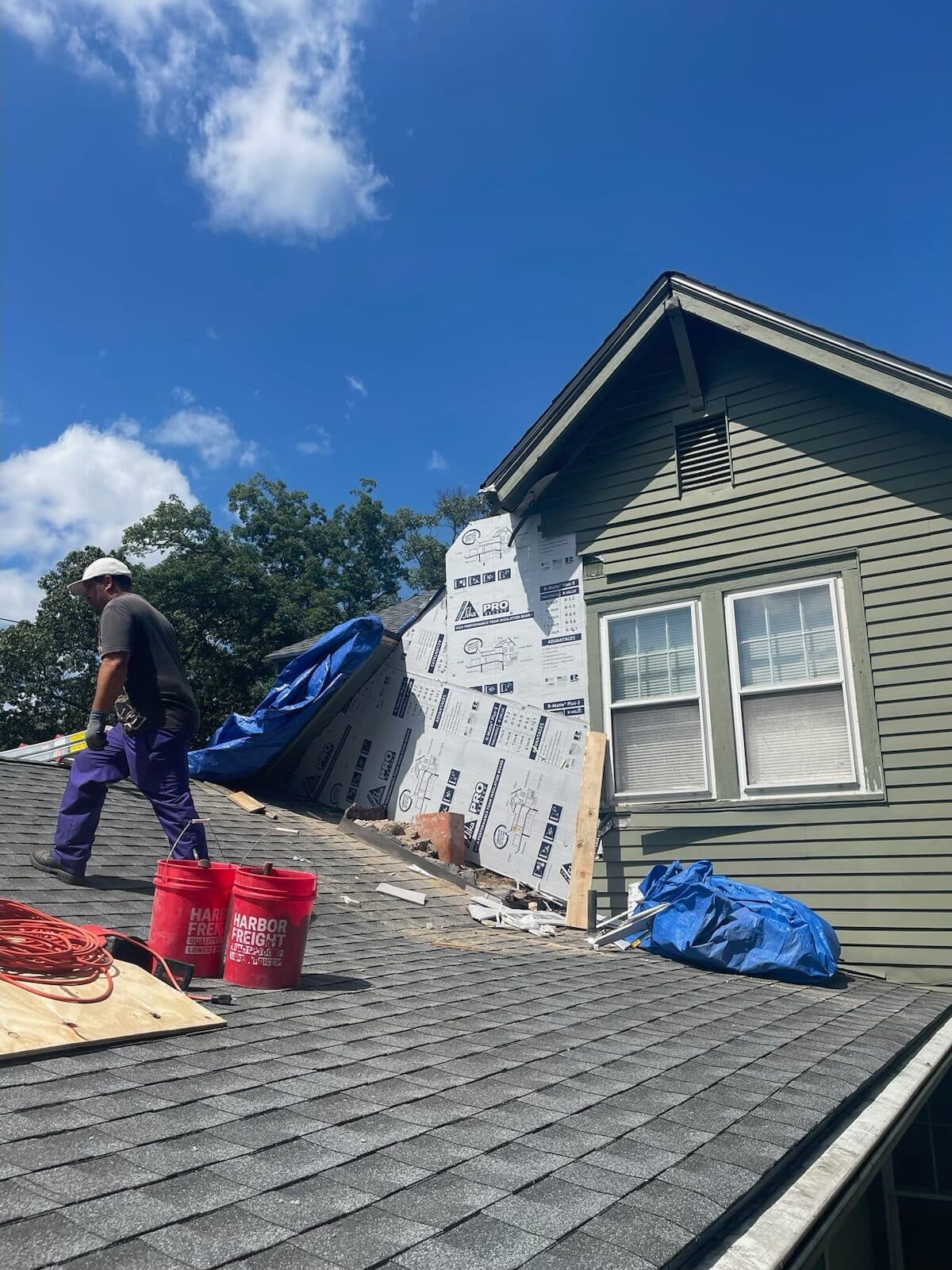
Get three roofing estimates after storm damage in NJ and at least one contractor will mention the '25% rule' — the guideline that if more than a quarter of your shingles are damaged, full replacement is more cost-effective than repair. The rule shows up constantly in insurance adjuster conversations and contractor sales pitches because it's a useful rule of thumb. Like most rules of thumb, it's directionally correct but missing nuance — and sometimes it gets cited as a script to push homeowners into replacement when repair would have been the right answer.
Knowing what the rule actually says, where it comes from, when it's right, and when to push back on it lets you make better decisions about your roof. This guide walks through all four.
What the 25% Rule Actually Says
If 25% or more of a roof's shingles are damaged, missing, or showing premature wear, repeated patching usually exceeds the cost of full replacement — once you account for labor mobilization, material matching difficulty, and the diminishing return of fixing shingles that are already aging out around the damaged ones.
The threshold isn't arbitrary. Once you cross roughly a quarter of the roof, several practical factors converge: the labor mobilization cost of bringing a crew out for repeated repairs starts adding up, the cost of matching shingle colors and product lines becomes harder (especially on older roofs where the original shingle is discontinued), and the remaining undamaged portion is usually a similar age and will need replacement soon anyway.
Where the Rule Comes From
Insurance adjusters use the 25% threshold as a rough decision rule for whether a covered claim should be settled as repair or as full replacement. Their reasoning is similar to the contractor logic: above 25%, the additional cost of partial repair (with all the soft costs of multiple trips and matching difficulty) approaches the cost of full replacement, and the carrier might as well authorize the replacement and give the homeowner a new roof rather than a patched older one.
Smart contractors adopted the same threshold because the math actually works out — and because aligning with insurance practice makes claim-driven projects easier to negotiate. The threshold appears in industry training, contractor sales scripts, and roofing-related insurance literature. It's a real rule of practice, not made up.
When the Rule Is Right
The 25% rule gives the right answer in several common scenarios:
- Storm damage of 30%+ on a roof that's already 18+ years old. The damaged portion needs work; the undamaged portion is approaching end-of-life. Full replacement gives you a fresh start and is comparable in cost to extensive repair.
- Multiple-slope storm damage. When hail or wind affects more than one slope and the damage is widespread, repair quickly becomes impractical from a logistics and matching standpoint.
- Significant granule loss across multiple slopes. Generalized granule loss isn't 'damage' in the storm sense, but it indicates the roof is failing in patterns and replacement is the right call.
- Roofs older than 20 years with any meaningful damage. The remaining life of the undamaged portion is too short to justify expensive repair.
When the Rule Is Wrong
The rule gives the wrong answer in several common scenarios that contractors and adjusters sometimes ignore:
- A 3-year-old roof with localized hail damage on one slope. The rest of the roof has 27+ years of remaining life. Repair the damaged slope and the roof is functionally a new roof again — replacement would be wasteful.
- Damage concentrated in one specific area (a tree branch impact, a single chimney leak event). Localized damage is repairable even if it nominally affects a meaningful percentage of one slope.
- Newer roofs (under 10 years) where any damage is the exception, not the indicator of generalized aging.
- Manufacturer defects covered under warranty. If the damage is a manufacturing issue, warranty-covered repair or replacement of specific shingles is the right path — not a full replacement out of pocket.
In each of these scenarios, applying the 25% rule mechanically would result in replacing a perfectly good roof and throwing away years of remaining life. The rule is a guideline, not a script.
Two Questions That Override the Rule
Rather than applying the 25% rule mechanically, ask these two questions:
1. How old is the undamaged portion?
If the rest of the roof has 10+ years of useful life left, fix the damaged section and keep the rest of the roof. The repair cost is small relative to replacement, and you preserve the remaining roof life. Even if the damage exceeds 25%, partial repair is usually the right call on a young roof.
If the rest of the roof is already at year 20+ of a 25-year roof, the 25% rule applies normally. The undamaged portion is approaching end-of-life anyway, so spot repair just delays an inevitable full replacement by 2–3 years.
2. Can the damaged area be repaired with matching materials?
Older roofs where the shingle line is discontinued may force full replacement anyway. Repair patches will be visible (because the new shingles won't match the aged existing ones) and unwarrantied (because the manufacturer won't honor warranty on materials that don't match the original install).
Newer roofs where the original shingle line is still in production can be repaired with matching materials — the patches will be subtly different but acceptable, and the warranty stays intact.
How Insurance Plays Into This
If your damage is insurance-claimable, the adjuster's decision matters. Some carriers strictly apply the 25% rule; some are more flexible. The adjuster will write their estimate based on what they see and the policy language.
If the adjuster writes the claim as repair-only and you believe full replacement is appropriate, you can:
- Have your contractor write a supplement explaining why repair is impractical (matching issues, accessibility, age of remaining roof, etc.).
- Request a re-inspection if new damage becomes visible after the initial assessment.
- Use the appraisal clause in your policy if there's a fundamental disagreement about scope.
The reverse is also true. If the adjuster writes the claim as full replacement and you'd prefer to take the repair scope and cash out the difference, that's usually possible with most policies (though some have endorsements that require the replacement work to actually happen).
What Contractors Should Be Quoting
Honest contractors should quote both repair and replacement options when they're both realistic — not just push you toward whichever pays them more. The estimate should include:
- Scope and price for spot repair of the damaged areas.
- Scope and price for full replacement.
- The contractor's recommendation, with reasoning — based on roof age, damage extent, and material availability.
- Honest assessment of remaining life on each option — 'this repair gets you 5–7 more years before full replacement is needed' vs. 'this replacement gets you 25 years of new roof.'
A contractor who only quotes one option (especially the more expensive one) without acknowledging the alternative is steering you toward their preferred outcome rather than serving your interest.
Red Flags in Repair-vs-Replace Conversations
Watch for these signals when a contractor is pushing the 25% rule too aggressively:
- Refusing to quote a repair option without first explaining why repair isn't realistic.
- Citing the 25% rule on damage that's clearly under 25% — sometimes contractors stretch the percentage to justify a larger scope.
- Quoting a much higher replacement price than other contractors with similar materials specified — usually a tell that they want the larger project.
- Pressuring you to sign immediately so they can 'start tomorrow' on insurance work. Reputable contractors give you time to evaluate.
- Claiming the manufacturer warranty is void because of any spot repair — usually false on common shingle lines.
What We Do at Tri-State
We always quote both options when they're both realistic — here's the repair scope and price, here's the replacement scope and price, here's our recommendation based on roof age and what we'd do if it were our own house. The decision should be yours with all the information, not steered by which option pays the contractor more.
We also write supplements for insurance claims when adjusters underwrite the damage — and we'll walk you through the negotiation if needed. Repair-vs-replace decisions involve real money and real long-term consequences. They deserve an honest contractor conversation, not a sales pitch built around the 25% rule.
Call (201) 779-3961 or use our online quote form for a free inspection. We'll write up both options where they're both realistic and let you decide with full information.
Last updated
Need Help With This?
We provide free, no-obligation inspections across New Jersey. Honest assessment, photo report, and a written estimate.