
·Storm Damage
After a Nor'easter: 7 Critical Roof Checks for NJ Homeowners
Nor'easters are the worst NJ roof event — sustained high winds plus heavy precipitation creates failure conditions. Here's the 7-step post-storm checklist that catches damage before it compounds into emergency repairs.
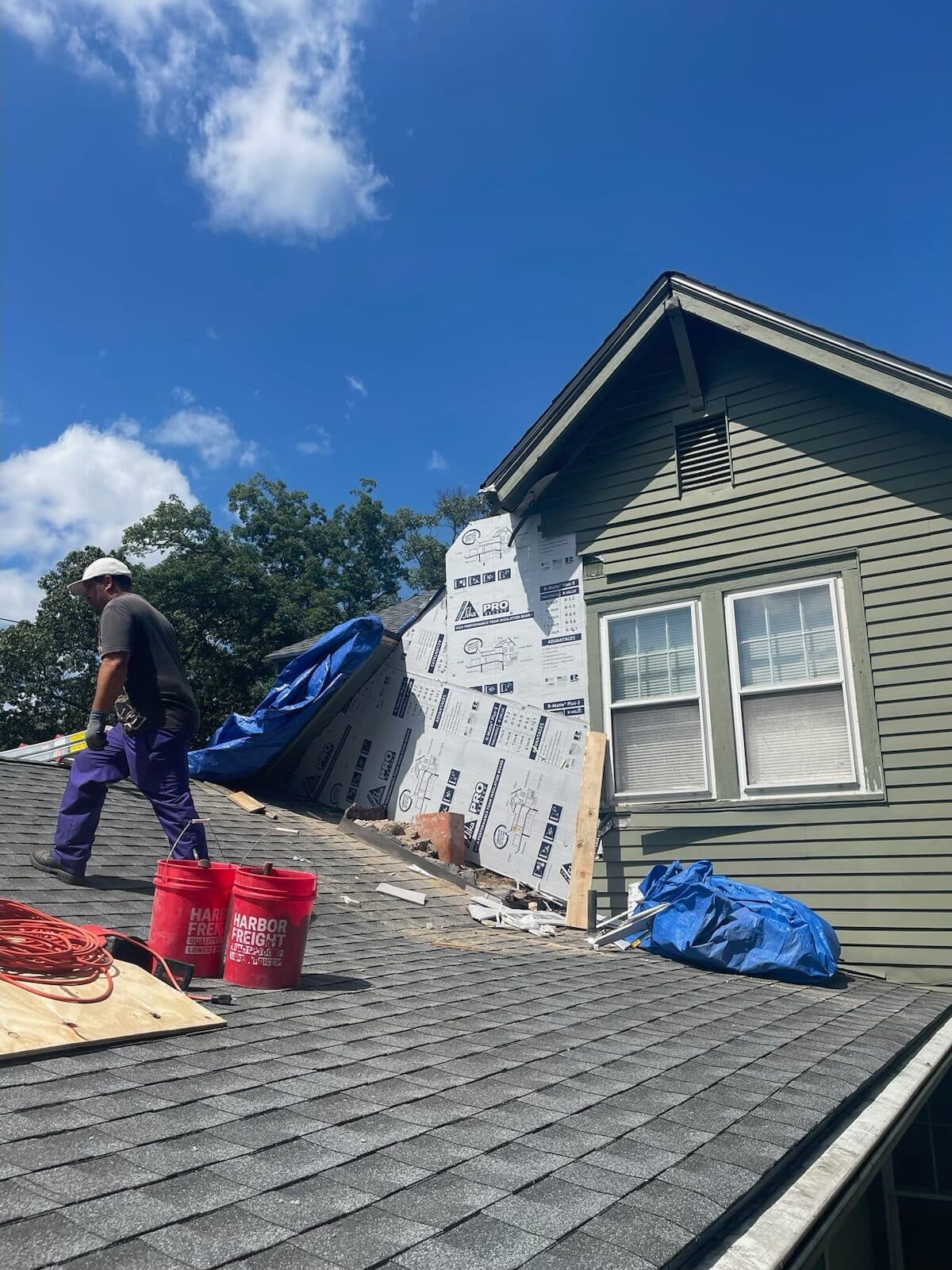
Nor'easters are the worst kind of storm event for New Jersey roofs. Sustained high winds combined with heavy precipitation (often rain transitioning to wet snow, or vice versa) creates conditions standard residential roofing is barely rated to handle. Even a moderate nor'easter can lift shingles, damage flashing, tear off gutters, and create new leak paths that didn't exist before the storm.
The first 48 hours after the storm passes are critical. Small problems caught early are repairable; problems left to weather another storm become much larger. Insurance documentation also matters in this window — clear photos and contractor scopes carry more weight when they're created promptly after the event. Here's the 7-step post-nor'easter checklist.
1. Walk the Property Perimeter (From the Ground)
Start with what you can see from ground level. Walk every side of the house, scanning the lawn, driveway, gutters, and ground beneath the roofline. Look for:
- Shingles in unexpected places — on the lawn, against the foundation, on the driveway, in your gutters from above. Even a few shingles in the yard means the storm peeled them off somewhere on the roof.
- Roof debris — pieces of flashing, vent caps, ridge cap pieces, or other roof material now on the ground.
- Branches or other airborne debris that may have impacted the roof.
- Granule streaks on the siding indicating heavy granule loss above.
Photograph what you find. Time-stamped photos from a phone are useful both for your own reference and for any insurance documentation later. Note where you found each piece — this helps identify which slope the damage is on.
2. Scan Every Slope with Binoculars or Phone Zoom
Don't climb up yet — wet shingles are extremely slick and unstable, and gutters may be loose. From ground level (or a stable distance back from the house), use binoculars or a phone zoom to closely inspect every roof slope:
- Missing shingles — gaps in the shingle pattern where wind tore tabs off.
- Lifted tabs that haven't fully torn off but are no longer sealed down.
- Damaged or missing ridge caps.
- Visible granule trails or stripes indicating localized wear from hail or impact.
- Bent or lifted flashing edges, especially at chimneys, skylights, and walls.
- Vent caps that are missing, damaged, or tilted.
Walk all four sides of the house. Storm damage is rarely uniform — one side facing the wind direction often shows significant damage while other sides look fine. Photograph each damaged area with the slope clearly identified.
3. Inspect the Attic from Below
Climb into the attic with a flashlight. Active water entry from storm damage often shows up here first — before it migrates down through insulation to become visible on the ceiling. Look for:
- Fresh wet spots on insulation, especially around chimneys, vents, and the eaves.
- Drips on rafters or framing.
- Fresh stains on the underside of the deck (compare to old stains, which are typically lighter and dryer).
- Visible water tracking down rafters.
- Smell of wet wood or insulation.
Active water entry caught at this stage can be contained with tarps and buckets in the attic, preventing further migration to the ceiling drywall below. Catching it in the attic vs. discovering it through a stained ceiling is the difference between a repair and a repair plus interior damage cleanup.
4. Check Interior Ceilings and Walls
Walk every room and look at the ceilings, especially upstairs rooms and any with an exterior wall on the upper floor:
- Fresh stain rings or water marks on ceilings.
- Peeling paint or bubbling drywall near corners, edges, or below valleys.
- Discoloration on the exterior-wall side of ceilings.
- Damp drywall when touched lightly with a finger.
- New musty smell or unexplained dampness in rooms.
Date-stamped photos of any interior water marks are critical for insurance documentation. Take wide-angle shots showing the location in the room, then close-up shots of the damage detail. The combination establishes both where the damage is and what it looks like.
5. Inspect Chimney and Skylight Flashings from the Ground
Chimney and skylight flashings are the most common storm-damage failure points. Sustained nor'easter winds lift flashing edges, and the heavy rain that follows finds the resulting gap. From ground level with binoculars, look for:
- Visible separation between flashing metal and the chimney brick or skylight frame.
- Lifted or bent flashing metal.
- Cracked or missing caulk seals.
- Chimney crown damage — cracks, missing concrete, or new gaps.
- Tilted or damaged chimney caps.
These failures often don't cause immediate leaks but set up failure during the next significant rain event. Catching them in the post-storm inspection window lets you address them before the next storm tests them.
6. Check Gutters and Downspouts
Nor'easter winds can rip gutters from fascia, dent them with airborne debris, or load them past their capacity with sudden heavy rain plus debris:
- Sagging or pulled-away gutter sections — visible from the ground.
- Bent, dented, or torn gutter pieces.
- Disconnected downspouts at the gutter or at the elbow joints.
- Downspouts that have been ripped from the wall.
- Splash blocks or extensions displaced from their position at the discharge point.
Sagging or pulled-away gutters need to be re-hung before the next storm — they'll fail completely under additional load. Damaged gutter sections need replacement. Downspout damage allows water to discharge incorrectly, potentially against the foundation.
7. Call Us for Professional Documentation
Within the first 48 hours after a storm, we can come out, walk the roof safely with proper equipment and fall protection, and document everything for an insurance claim if needed. Professional documentation is significantly stronger than homeowner photos for two reasons:
- Access — we can safely walk every slope and inspect details a homeowner can't see from the ground. Hidden damage that's not visible from below shows up in our documentation.
- Expertise — we know what to photograph, what scope to write up, and how to present the damage in a format insurance adjusters expect. Homeowner photos sometimes miss the elements that matter most for claim approval.
Even if you don't end up needing repair, the documentation creates a paper trail that protects you. The inspection is free in our NJ service area — and we get to you faster than waiting on an insurance adjuster initially.
What Happens If You Skip the Checklist
We see the consequences of skipped post-storm inspections constantly. The patterns:
- Missing shingles that weren't replaced before the next storm — additional shingles tear off because the original missing one created a wind-lift point that propagates.
- Hidden leaks that aren't found until ceiling damage appears weeks later — by then, insulation is ruined and drywall damage is significant.
- Damaged flashings that aren't re-sealed — the next significant rain finds the gap and causes interior water entry.
- Insurance claims filed too late or with insufficient documentation — denied or paid at reduced amounts.
Insurance Claim Tips
If you intend to file an insurance claim:
- Don't wait. Most NJ policies require notice within 30–60 days of the loss event. Earlier is better.
- Document before any repair work. Insurance adjusters need to see the damage as it was, not after you've patched it.
- Get a contractor scope before the adjuster visits. Our written scope serves as your evidence document during the claim conversation.
- Meet the adjuster on-site. We do this on every claim we work on — having a contractor present prevents adjusters from missing damage we documented.
- Don't sign anything you don't understand. Adjuster paperwork sometimes includes language that limits what you can claim later. Read carefully or have us review it.
Free Post-Storm Inspections in NJ
Within the first 48 hours after any significant storm, our inspections are free for NJ homeowners — and we prioritize storm-impacted homes in our scheduling. We walk the roof safely with fall protection and proper equipment, photograph everything, write up a scope, and document the damage in a format that supports insurance claims if needed. Call (201) 779-3961 — for active storm response we're often available same day.
Last updated
Need Help With This?
We provide free, no-obligation inspections across New Jersey. Honest assessment, photo report, and a written estimate.