
·Homeowner Guide
Roof Repair Cost in NJ: What Each Type of Fix Actually Involves
Why NJ roof repair quotes range so wildly — the repair ladder from a pipe boot swap to deck replacement, and what moves any fix up or down it.
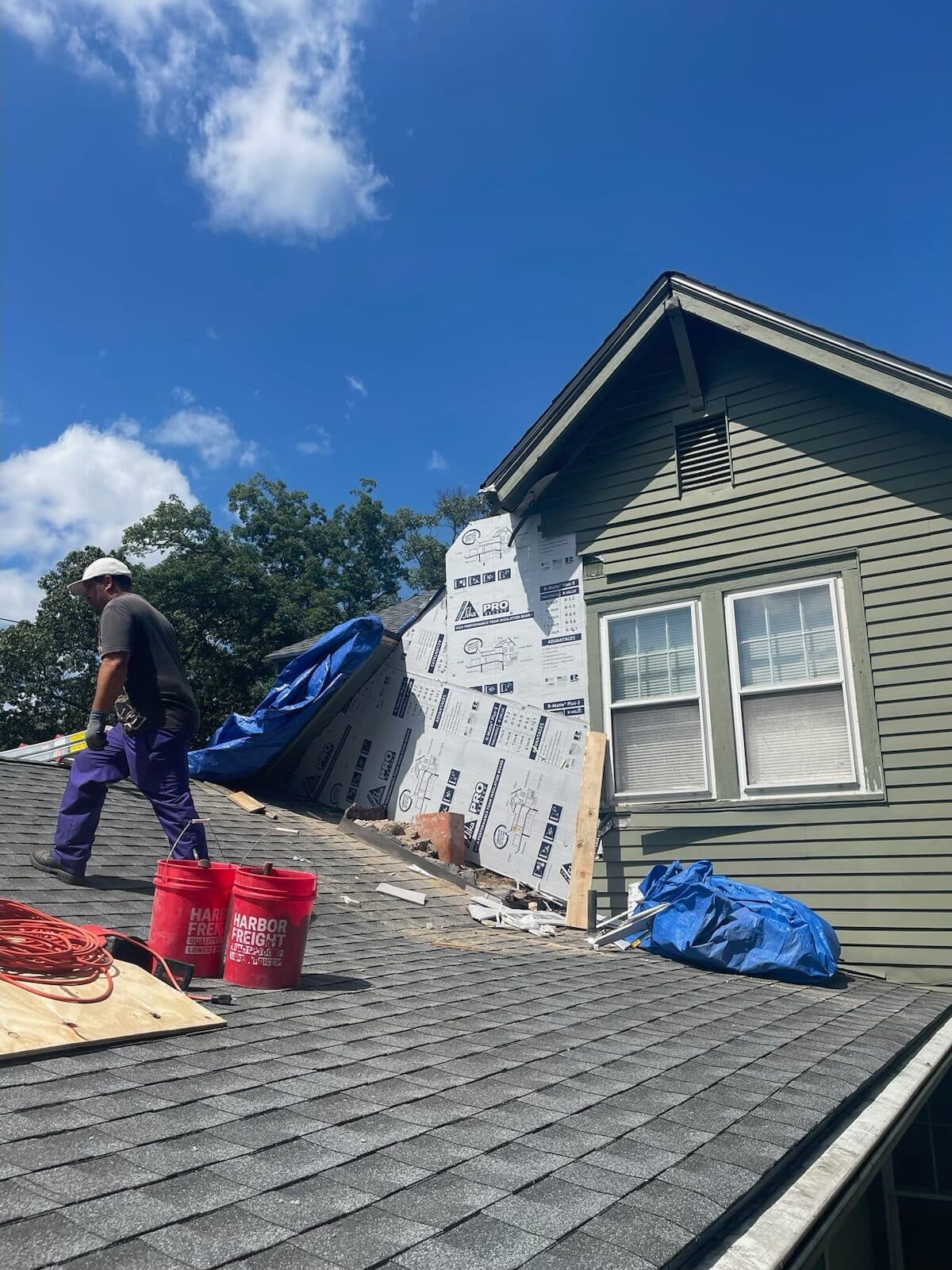
Ask three roofers to look at the same ceiling stain and you can get three quotes that look like they belong to three different houses. Most homeowners read that spread as proof somebody is padding the bill. Sometimes that's true. More often, the quotes differ because the diagnoses differ — one roofer is pricing a tube of sealant, another is pricing new chimney flashing, and the third got into the attic, traced the water, and found soft plywood the other two never saw.
You won't find a single dollar figure in this article, and that's deliberate. A number pulled from a national average tells you nothing about your roof, your pitch, or how long the leak ran before you picked up the phone. What actually helps is understanding the repair ladder: what each tier of fix involves, why each rung costs more than the one below it, and which variables move your job up or down. Once you understand the scope, you can read any estimate and judge whether the number attached to it is fair.
Why Repair Quotes Range So Wildly
Three things drive the spread. The first is the minimum-visit floor. Every legitimate roofer rolls a truck, at least two workers, ladders, fall protection, fuel, and insurance to your driveway before a single shingle gets touched. The smallest repair on the books still carries all of that overhead, which is why a ten-minute fix is never priced like ten minutes of labor — from any contractor, anywhere.
The second is diagnosis. Water almost never shows up where it gets in. It enters at a flashing joint or a cracked boot, runs along a rafter or the underlayment, and surfaces on your ceiling six or eight feet from the entry point. A roofer who quotes from the driveway is pricing the stain. A roofer who gets on the roof and into the attic is pricing the actual hole. Those are different jobs, and they carry different numbers.
The third is scope honesty, which the rest of this article is about. Cheap quotes are usually quotes for less work — caulk smeared over old flashing instead of new flashing, a patch laid over soft decking instead of new decking. The ladder below runs from the cheapest legitimate repairs to the most involved, with what each rung actually includes.
Tier 1: Minor Repairs — the Bottom of the Ladder
This tier covers a handful of wind-lifted or cracked shingles, a split rubber pipe boot, nail pops backing up through the surface, and fresh sealant at a penetration like a vent or an old satellite mount. One visit, a couple of hours, materials carried on the truck. These are the cheapest items on this entire page, sitting just above the minimum-visit floor.
The pipe boot deserves a special mention because it's the most common small repair we do. The rubber collar around your plumbing vent pipes bakes in the sun and splits years before the shingles around it wear out, and the leak it causes conveniently shows up near bathrooms, because that's where the pipes are. Swapping a boot is quick work. Catching it early is what keeps the job on this rung — letting it run a couple of seasons is how a bottom-tier repair graduates to the top of the ladder.
Tier 2: Moderate Repairs — Where Most Real Leaks Live
The middle of the ladder is flashing and section work: replacing the step and counter flashing where the roof meets a chimney, sidewall, or skylight; rebuilding a valley; or tearing off and re-shingling a full section with new underlayment beneath it. Expect a half day to a full day of crew time and materials that go well beyond a bundle of shingles.
The reason this tier costs meaningfully more than the first isn't just the hours. Done right, flashing work means removing shingle courses, weaving new step flashing into each course as it's relaid, and cutting counter flashing into the chimney's mortar joints. The shortcut version — caulk over the old metal — takes an hour and shows up as the lowest quote on your kitchen table. It also dries out and leaks again within a few seasons, which is why the cheap flashing quote is usually the most expensive one measured over ten years.
Valleys are similar. A valley carries more water than any other line on the roof, so rebuilding one means opening up both adjoining slopes, installing new ice-and-water membrane down the center, and re-lacing the shingles from both sides. There is no honest one-hour version of that job.
Tier 3: Major Repairs — Deck, Structure, and Storm Damage
The top of the ladder is anything that goes below the shingles and into the structure: cutting out rotted plywood decking, sistering water-damaged rafters, or repairing widespread storm damage across multiple slopes. These are multi-day jobs with carpentry, disposal, and material quantities closer to a small re-roof than a patch.
This is also where insurance may legitimately enter the picture. Homeowner policies are written for sudden events — a wind event that strips a slope, a limb through the deck, hail — not for gradual wear. If your damage traces to a single storm, it's worth understanding how the insurance claim process works before you authorize permanent repairs, because the insurer will want the damage documented the way the storm left it.
Once a repair touches a large share of the roof, the honest move is to price it against replacement — more on that below.
What Moves Any Repair Up or Down the Ladder
Two identical-sounding repairs on two different houses can land on different rungs. These are the variables that move the number at every tier:
- Pitch and access. A walkable ranch roof and a steep three-story colonial are different jobs. Steep pitch means harnesses, roof jacks, and staging, and everything from tear-off to cleanup runs slower. Tight ladder access or a long carry from the truck adds time the same way.
- Material. Asphalt shingle work is the baseline. Slate and tile demand slower hands and matching stock that can take time to source. Low-slope sections are a different trade entirely — membrane work, not shingle work — which is why we scope flat roof repair separately.
- Shingle matching on older roofs. If your shingle line was discontinued, or twenty years of sun has faded the color, an invisible match may not exist off the shelf. Sometimes we harvest shingles from a hidden slope to patch a visible one. Matching takes time, and time is most of what a repair costs.
- How long the leak ran before the call. Water damage compounds. A cracked boot caught in the first month is a tier-one fix. The same boot after two winters can mean soaked insulation, stained drywall, and soft decking — a tier-three job that started life as the cheapest item on this page.
There's one more variable worth naming plainly: when you call. Storm-week pricing is real, and not just from bad actors. After a nor'easter rolls through northern New Jersey, every roofer's phone rings at once and the supply of crews doesn't change. Urgent work commands a premium everywhere in the trades, and anyone who claims otherwise is selling something.
Here's how we handle it. Our emergency roof repair line answers around the clock, and we dispatch same-day in our core northern-NJ counties. The emergency visit exists to stabilize — a proper tarp, a temporary stop on the water — so the permanent repair can be diagnosed and priced at normal pace instead of panic pace. A tarp costs a fraction of what a weekend of open leaking does to ceilings, insulation, and floors. Stabilize first, decide second.
When Repair Stops Making Sense
There's a point on every roof where repairing is just a slower, more expensive way of replacing. Our rule of thumb is the 25% line: once damage or wear covers more than about a quarter of the roof, replacement usually wins on cost per year of remaining life. We've written a full explanation of the 25% rule if you want the reasoning behind the threshold.
Age matters as much as area. A flashing repair on an eight-year-old roof protects two decades of remaining life. The same repair on a 22-year-old roof protects almost nothing — the shingles around it are at end of life, and the next leak is already loading somewhere else. If you're calling us for the third repair in two years on the same aging roof, we'll tell you straight that roof replacement is the better spend, and our guide to what drives replacement cost in NJ walks through where that money actually goes.
How to Read a Repair Estimate
A good repair estimate tells you the scope before it tells you the number. It names the specific fix — new step and counter flashing at the chimney, not just chimney repair. It lists the materials going in. It comes with photos of the actual problem, taken on your roof, not pulled from a stock library. And it puts the workmanship warranty on the repair in writing, with a term, so you know who owns the fix if water ever shows up again.
That's how we write ours. Every roof repair estimate we send is free, written, itemized, and backed by photos of what we found up there, and our NJ HIC number (#13VH12696700) is on the paperwork — you can verify it on the state's Division of Consumer Affairs site in under a minute. If a stain is spreading on your ceiling, or you're holding a quote that doesn't explain itself, call us. We'll tell you which rung of the ladder you're actually on, and you'll have the full scope in writing before anyone touches a shingle.
Need Help With This?
We provide free, no-obligation inspections across New Jersey. Honest assessment, photo report, and a written estimate.