
·Maintenance
Summer Heat and Your NJ Roof: What's Happening Up There (and How to Stop It)
By mid-July, a sealed NJ attic can hit 140°F at the deck. That extreme heat ages your roof 2-3x faster than rated lifespan. Here's how to diagnose ventilation problems and fix them.
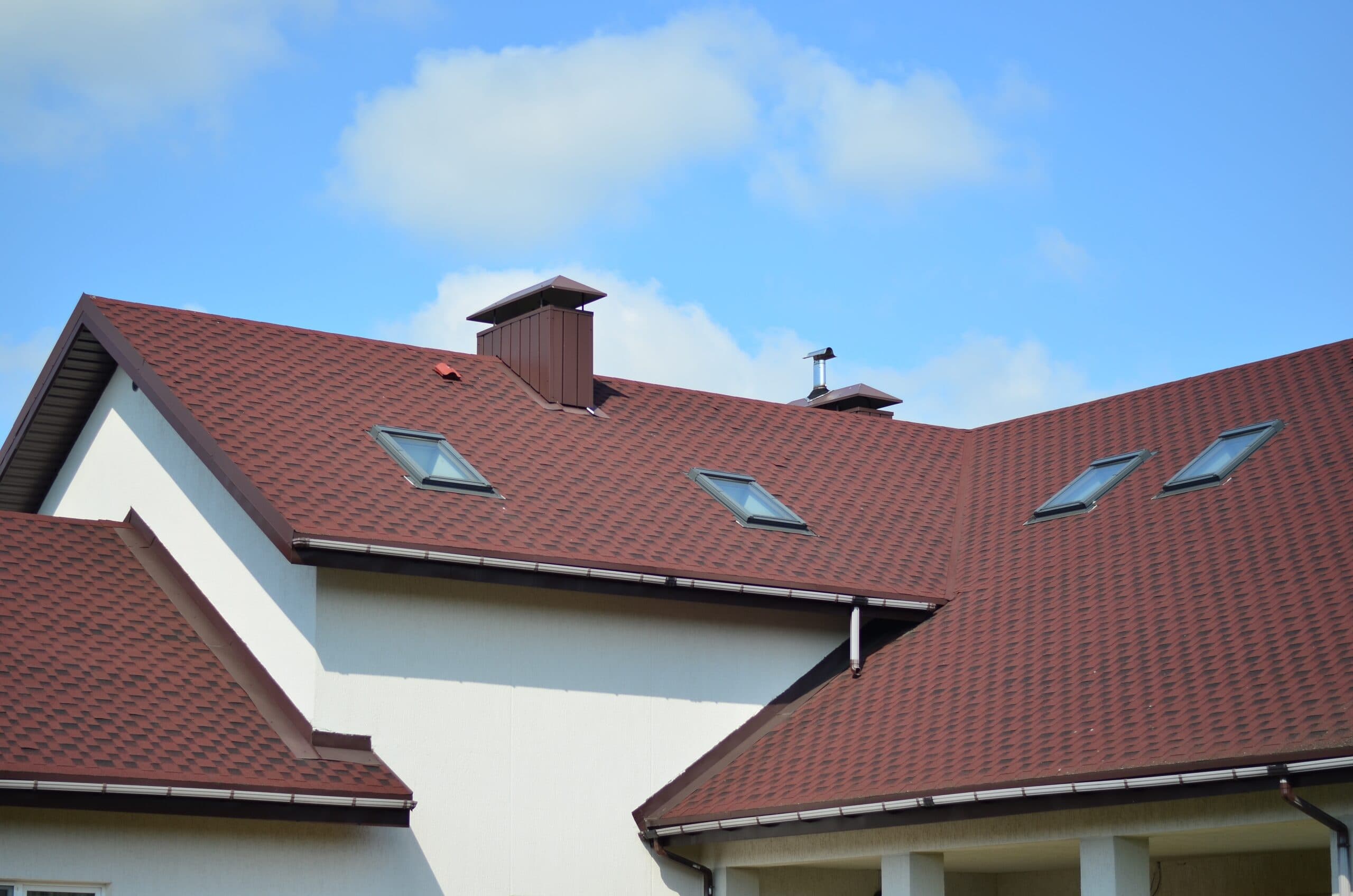
Summer is when roofs in New Jersey age fastest. By mid-July a sealed attic with inadequate ventilation regularly hits 130–140°F at the underside of the deck. That extreme heat doesn't just make your AC work harder — it ages your shingles from the inside out, accelerating the natural decline of the asphalt binder that holds your roof together.
Most homeowners don't realize what's happening because the visible signs (granule loss, curling, brittleness) take years to show up. By the time those signs are obvious, the damage is done — there's no recovering the shingle life lost to baked attic conditions over a decade. The good news: identifying and fixing inadequate ventilation now extends the life of what's left and prevents the next roof from aging the same way.
What Heat Actually Does to Asphalt Shingles
Asphalt shingles are a layered product: a fiberglass mat, asphalt binder coating both sides, and granules embedded into the top asphalt layer. Every one of those components is heat-sensitive in some way.
The asphalt binder softens at high temperatures and oxidizes faster. Oxidation is the chemical breakdown of the asphalt — the same process that makes old asphalt driveways crack and flake. When the binder oxidizes, three things happen: granules separate from the surface (because the binder that held them in place is degrading), the mat becomes brittle (because flexible asphalt is now hardened), and the seal strip between shingle courses dries out and releases (because the bonding asphalt is no longer pliable).
The mat itself, while heat-resistant, becomes less dimensionally stable at extreme temperatures — meaning the shingle can warp, cup, or curl as it expands and contracts through daily heat cycles. Repeated thermal cycling at high temperatures fatigues the mat much faster than at moderate temperatures.
Granules are the most heat-resistant component but still depend on the asphalt binder beneath them. Once the binder fails, granules wash off in rain. Bare asphalt mat then degrades much faster from UV exposure — a downward spiral that accelerates as more granules are lost.
How Much Life Does Heat Cost You?
Industry data suggests that a shingle rated for 30 years on a properly ventilated roof might be at practical end-of-life in 18–20 years on a roof with chronically overheated attic conditions. That's 10+ years of roof life lost to a problem that's fixable for the cost of a half-day install on most NJ homes.
The shingles themselves don't fail at year 18 — they simply reach the same wear state in 18 years that should have taken 30. By that point, the curling, granule loss, and seal failures we'd expect to see at end-of-life are already present. The remaining usable life is short, and patching becomes impractical.
Why Ventilation Matters More Than Insulation
Many homeowners assume insulation is the answer to attic heat. Insulation matters — it slows heat transfer between the attic and the living space below — but it doesn't get heat out of the attic itself. The heat is still up there, still aging the shingles from below.
Ventilation is the lever that actually addresses attic temperature. Properly balanced soffit-to-ridge ventilation moves hot air out of the attic and pulls cool outside air in through the soffits. The flow keeps the attic temperature close to outdoor temperature year-round — preventing the shingle-baking conditions of summer and the ice-dam conditions of winter.
Without working ventilation, even excellent insulation can't keep the attic temperature reasonable. The math is straightforward: insulation = 'how slowly does heat move from attic to living space'; ventilation = 'how quickly does heat leave the attic at all.' Both matter, but only ventilation addresses what's happening to your roof.
The 1/300 Rule
NJ code (and the International Residential Code more broadly) requires 1 sq ft of net free vent area per 300 sq ft of attic floor, split roughly 50/50 between intake (soffit vents) and exhaust (ridge vent or gable vents). On a 1,500 sq ft attic, that's 5 sq ft of vents — 2.5 at the soffits and 2.5 at the ridge.
Most older NJ homes don't meet this rule. Many newer homes meet it on paper but have failure-modes that prevent the calculated airflow from actually happening — soffit vents blocked by insulation pushed against them during a poorly-baffled insulation install, ridge vents installed without enough soffit intake to balance them, or exhaust fans that short-circuit ridge vents and prevent proper flow.
If you're not sure whether your home meets the 1/300 rule, a roofer can calculate it during an inspection. The number itself isn't the goal — balanced airflow from soffit to ridge is what matters in practice.
How to Diagnose Inadequate Ventilation
Several signs indicate your attic ventilation isn't working:
- Climb into the attic on a sunny summer afternoon. If the attic feels significantly hotter than outdoor temperature, ventilation isn't working. A properly ventilated attic in summer might run 5–10°F above outdoor; an unventilated attic regularly hits 30+ °F above.
- Look at the soffit vents. If you can see them blocked by insulation pushed against the underside of the roof deck, intake airflow is choked off.
- Check whether you have a ridge vent at all. Many older NJ homes were built with gable vents only (small vents in the triangle of the gable wall) — these don't move air the way ridge vents do.
- Note ice-dam formation in winter. Chronic ice dams almost always trace back to inadequate ventilation in the attic — the heat that melts snow comes from a warm attic.
- Smell the attic. A persistent musty or stale smell indicates trapped moisture that ventilation should be removing.
Common Ventilation Failure Modes
When we audit ventilation systems, we typically find one or more of these problems:
- Soffit vents blocked by insulation. Common when blown-in insulation was added later without proper baffles to keep insulation out of the soffit area.
- Ridge vent installed but no soffit intake. Air can't enter the attic, so it also can't exit — even though the ridge vent looks correct from outside.
- Powered attic fans short-circuiting passive ventilation. The fan creates negative pressure that pulls air from the path of least resistance — often through ceiling penetrations into the conditioned space below — rather than from the soffit vents.
- Whole-house fans that override the attic ventilation system. Useful in summer evenings but not a substitute for continuous passive ventilation.
- No exhaust path at all. Some older NJ homes have intake (soffit vents) but no exhaust — the ridge wasn't cut for a ridge vent during the last roof. Heat just builds up.
The Fix: Balanced Soffit-to-Ridge Ventilation
On most NJ homes, fixing ventilation is a half-day install when paired with a roof replacement, or a 1–2 day job as a standalone retrofit. The work includes:
- Cut a continuous slot along the ridge of the roof to receive ridge vent material.
- Install Cobra ridge vent (or equivalent) along the full ridge length, capping with shingle-style ridge caps to match the roof.
- Open and clear all soffit vents. Install ventilation baffles between rafters in the eave area to keep insulation away from the soffit so air can flow.
- Add more soffit venting if existing intake area is insufficient — typically by installing additional aluminum soffit vent strips between existing vents.
- Disable or remove any powered attic fans that are short-circuiting the passive flow.
When done as part of a roof replacement, the marginal cost is small (most of the labor overlaps with shingle install). As a standalone retrofit, it runs in the low-to-mid four figures depending on roof size and existing conditions — significantly cheaper than the shingle life it saves.
Cooling Cost Side Benefit
Beyond extending shingle life, proper ventilation reduces the load on your AC. An attic that runs at 95°F instead of 140°F radiates much less heat downward into the living space, reducing the heat load your cooling system has to overcome. NJ homeowners with proper ventilation typically see 10–20% reductions in summer cooling costs — payback that often justifies the ventilation upgrade on its own, before even counting the roof-life extension.
When to Act
If your roof is over 10 years old and the ventilation is inadequate, the heat damage to existing shingles is already done — those years of accelerated aging can't be recovered. But fixing the ventilation now extends what life remains and prevents the next roof from aging the same way.
If you're planning a roof replacement soon, ventilation review and upgrade should be part of the quote — non-negotiable. Any contractor who doesn't address ventilation as part of a re-roof scope is selling you a roof that will fail early. We include it in every Tri-State install scope by default, and we'll show you the math on the calculated vent area before any work starts. Call (201) 779-3961 or use our online quote form for a free inspection and ventilation audit.
Last updated
Need Help With This?
We provide free, no-obligation inspections across New Jersey. Honest assessment, photo report, and a written estimate.