
·Process
Why Is My Roof Leaking? The Most Common Causes and How to Find the Source
A roof leak almost never starts where the water shows up inside. Here's how to think about the most common leak sources in NJ homes, why they're so often misdiagnosed, and how a roofer actually tracks a leak to its real entry point.
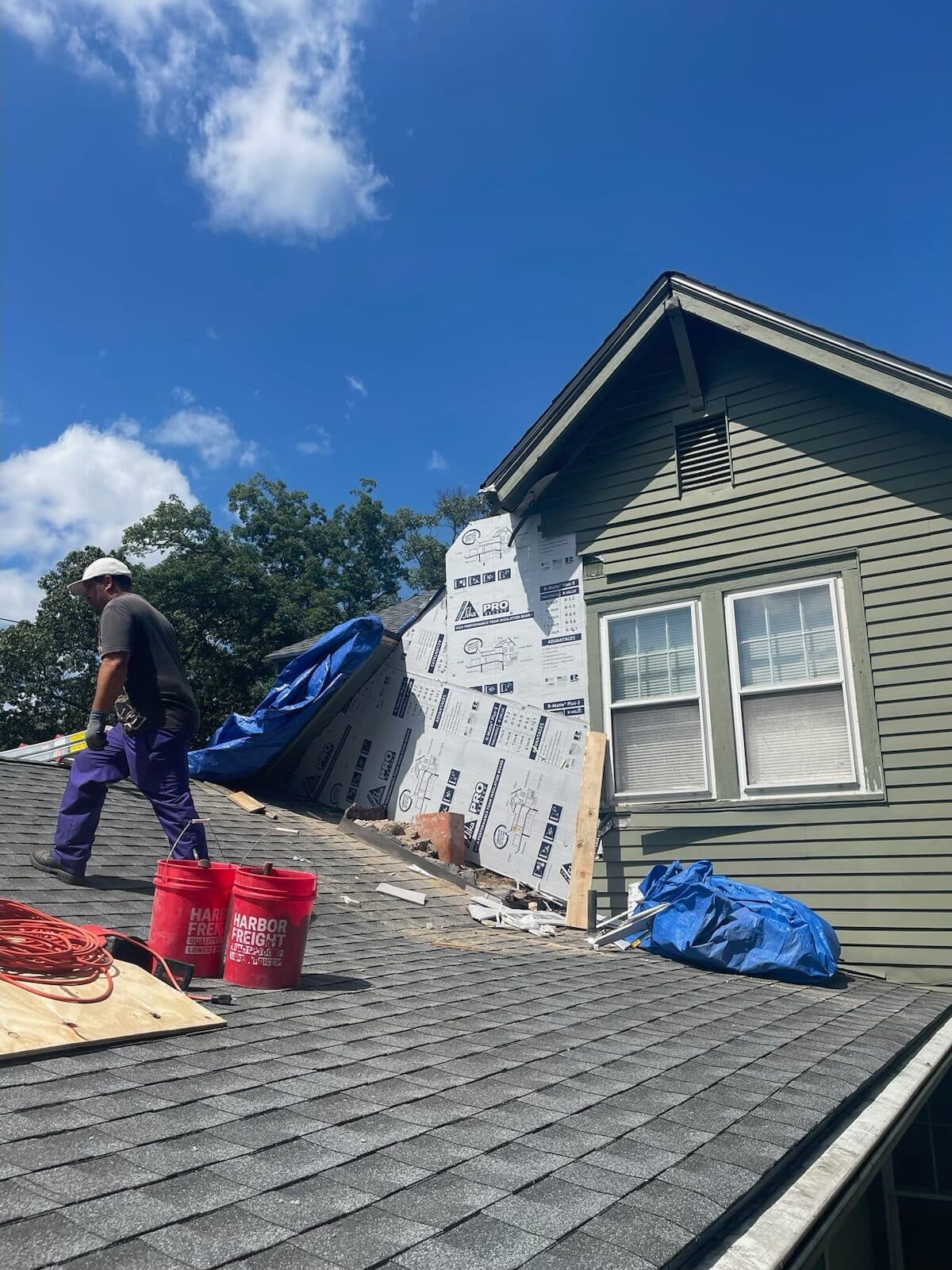
A leaking roof is one of the most stressful problems a homeowner faces — partly because of the water itself, and partly because leaks are genuinely hard to diagnose. The single most important thing to understand is this: water rarely enters where it shows up inside. It enters at a failure point on the roof, travels along the underside of the deck or down a rafter, and drips through the ceiling somewhere else entirely. Chasing the stain on your ceiling almost never leads to the actual leak.
This guide walks through the most common roof leak sources we diagnose on New Jersey homes, why each one happens, and how a roofer actually tracks a leak back to its real entry point. Understanding this helps you describe the problem accurately, avoid contractors who 'fix' the wrong thing, and know when a leak is a simple repair versus a sign of a bigger problem.
Why Roof Leaks Are So Hard to Find
Water follows the path of least resistance, and that path is rarely straight down. A leak that enters at a chimney flashing on one side of the roof can travel ten feet along a rafter before it finds a seam in the ceiling drywall and drips. By the time you see a stain, the water has already traveled — which is why the entry point is almost always 'uphill' from where the damage appears, and often nowhere near directly above it.
This is also why caulk-and-hope repairs fail. A contractor who seals the spot directly above the interior stain is usually sealing a place where there's no leak at all, while the real entry point keeps letting water in. Proper leak diagnosis means starting from the interior evidence and working backward and upward to find where water is actually getting through the roof system.
The Most Common Leak Sources (In Rough Order)
1. Flashing Failures Around Penetrations
Flashing — the metal that seals where the roof meets something else — is the number one leak source on most roofs. Anywhere the roof plane is interrupted, there's flashing, and flashing is where roofs leak first:
- Chimney flashing — step and counter flashing that's pulled away, or was only caulked on in the first place.
- Wall flashing — where a roof meets a vertical wall (common on additions, dormers, and split-levels).
- Vent and pipe boots — the rubber gaskets around plumbing stacks crack from UV exposure within 10–15 years.
- Skylight flashing — almost always the cause when a skylight leaks, not the skylight itself.
- Valley flashing — where two roof planes meet and concentrate a large volume of water.
Flashing leaks are usually repairable without replacing the roof — but only if the flashing is re-done properly with integrated metal rather than another layer of caulk.
2. Missing, Cracked, or Lifted Shingles
Wind lifts shingles and breaks their seal; a falling branch cracks them; age makes them brittle. Once a shingle is missing or lifted, water reaches the underlayment — and if the underlayment is old felt that's dried out, it reaches the deck. A single missing shingle in the wrong spot (a valley, near a penetration, low on a slope) can cause a significant leak. This is one of the easier sources to spot from the ground after a storm.
3. Chimney Problems (More Than Just Flashing)
Chimneys are leak magnets because they involve four separate systems that can each fail: the flashing where the chimney meets the roof, the crown (concrete cap on top), the mortar joints between the bricks, and the chimney cap over the flue. A chimney leak is often a combination of these, which is why chimney leaks that get 'fixed' repeatedly often had multiple causes and only one was addressed. If your stain is near a fireplace or below a chimney, the chimney itself — not just its flashing — is the prime suspect.
4. Ice Dams (Winter-Specific)
In a New Jersey winter, a leak that appears during or just after a snow event is often an ice dam. Heat escaping into the attic melts snow on the upper roof; the meltwater runs down to the cold eave, refreezes into a ridge of ice, and backs up water under the shingles. Ice-dam leaks are seasonal and trace back to attic insulation and ventilation problems, not a hole in the roof — so the permanent fix is in the attic, not on the shingles.
5. Worn-Out Underlayment on an Aging Roof
On a roof past 20 years, the underlayment beneath the shingles has often dried out and lost its waterproofing backup function. At that point, any minor shingle issue becomes a leak because there's no second layer of defense. When an old roof starts leaking in multiple places over a short period, it's usually not a single repairable failure — it's the whole system reaching end-of-life. This is the leak pattern that points to replacement rather than repair.
How a Roofer Actually Tracks a Leak
Proper leak diagnosis works backward from the evidence:
- Start inside: note exactly where the water appears, and inspect the attic to find where it's entering the ceiling or running down a rafter.
- Trace uphill: follow the water trail up the rafter or deck to find where it's coming through — almost always higher up the roof than the interior stain.
- Inspect the suspect penetration or detail on the roof exterior: flashing, shingle, valley, or chimney at that location.
- Water-test if needed: systematically running water over isolated sections of the roof to reproduce the leak and confirm the exact entry point before repairing.
This methodical approach is the difference between a repair that holds and one that just moves the problem. A contractor who climbs up, applies caulk to the most obvious spot, and leaves is not diagnosing — they're guessing.
What to Do Right Now if Your Roof Is Leaking
- Contain the water inside: place buckets, move furniture, and if the ceiling is bulging with trapped water, carefully pierce it at the lowest point to drain it into a bucket (a controlled release prevents a larger ceiling collapse).
- Photograph everything for insurance, with timestamps.
- Don't climb up on a wet roof to investigate — it's slick and dangerous; leave the exterior diagnosis to a roofer with proper equipment.
- Call for an inspection promptly — the longer water enters, the more it damages insulation, drywall, and framing.
Free Leak Diagnosis Across New Jersey
We diagnose roof leaks the methodical way — finding the actual entry point before recommending a fix — and our inspections are free across our NJ service area. Most leaks turn out to be repairable flashing or shingle failures, not full-roof problems. We'll tell you honestly which one you have, with photos. Call (201) 779-3961 or use our online quote form, and for an active leak we offer same-day emergency tarping to stop the water while we plan the permanent repair.
Last updated
Need Help With This?
We provide free, no-obligation inspections across New Jersey. Honest assessment, photo report, and a written estimate.